Saturday, 31 December 2022

Shows of the Year

Best new show:

A League of Their Own

This show is so joyful, so clearly a work of love by everyone involved - how amazing is it to see Abbi Jacobson go from Broad City to this! I love everything here, from the way it builds on the film in a way that acknowledges the shortcomings but retains the glee, the fleshed out minor characters (Roberta Colindrez from Vida! Kelly McCormack from Killjoys and many other Canadian delights!) that grow on you so much as the show progresses, the friendship between Max and Carson, the friendship between Max and Clance - and I'm quietly convinced Jacobson watched her partner Jodi Balfour in Bomb Girls and Had An Idea, and it comes together so well. 

Severance

Pachinko

This adaptation of Min Jin Lee's novel spans several generations of a Korean family but centres on Sunja (played by Minha Kim at a younger age and Youn Yuh-jung later), who migrates from Japanese occupied Korea to Japan. It is a history of a violent occupation and racism that still exists in the late 1980s, when Sunja's grandson Solomon returns to Japan from the United States to convince an old woman to sell her valuable land to his company. Pachinko is immersive, sometimes overwhelming in its sadness - the sadness of people craving what they left behind, but can never truly return to, the everyday violence of a country that does not welcome them, even when it is happy to exploit their labour, but also the underlying impossibility to truly convey personal history to the next generation, especially when that generation is so eager to get on with their own lives, with little space to contemplate the sacrifices of their parents and grandparents. In an episode that is not based on the novel, we get the backstory of Sunja's first lover (a man who wanted to make her his concubine, but found her unwilling to live in shame - he guards the life of her and her son secretly from then on, uses his influence to award them a measure of protection), who lived through the devastating Great Kantō earthquake in 1923. 

The Bear

Abbott Elementary

Watching the first season of this show, I was reminded of everything that went wrong in beloved Parks and Recreation's first season: how Parks didn't yet know what perspective to take, how it mocked Leslie Knope, how it started off as a whole lot more cynical and cold. Parks found its feet after that short first season, but Abbott Elementary doesn't need any idle time to get there: it's perfect from the beginning, warm and un-cynical, relentlessly funny, perfectly cast. 

Interview with the Vampire

An explicitly queer sequel to the 1990s film, that feels like it is taking the Anne Rice novel and exploiting its full potential without the burden of having to hold back, or hide in subtext. Interview with the Vampire is about a self-destructive love, deals with racism, and the nature of memory and recollection, and how those things become warped when they are turned into a story told to someone else. 

The Peripheral

It's incredible that this is the first adaptation of one of William Gibson's novels (Johnny Mnemonic and Abel Ferrara's New Rose Hotel are based on his short stories). It is an interpretation of sorts, deviating from the story it is based on, and very much influenced by the visual language creators Lisa Joy and Jonathan Nolan developed in Westworld. Chloë Grace Moretz is a perfect Flynne Fisher, who gets caught in a complex thriller plot when she tests out what she believes to be new gaming technology for her veteran brother Burton (Midsommar's Jack Reynor). I still dream of what Olivier Assayas could make with Pattern Recognition, but this is an almost perfect first season. 

Lord of the Rings: The Rings of Power

I think that some of the draw of this show for me was how much it reminded me of watching the three Peter Jackson films when they came out. The Rings of Power is beautiful - many of its dialogue scenes feel like they are staged like they would be in a play, the scenery of New Zealand is captured gorgeously, the night scenes are - blissfully - visible, all of which creates an expansiveness that I think has been missing from other recent fantasy series. 

The Serpent Queen

Samantha Morton is Catherine de' Medici, who survives intrigues at the French court through brilliant plotting (her handling of the politically hapless Mary Stuart is mouthwatering, especially when you've been raised with the historical perspective of Schiller's play), in a series that takes many historical liberties but is endlessly entertaining to watch. 

Best one-season show:

Station Eleven

Life After Life

Archive 81

The Midnight Club

Mike Flanagan's newest story is about a group of teenagers who spend their last days together in a hospice, meeting each night to tell stories to each other. There is another story in the background about the history of the house (it resembles Archive 81, sometimes), but I think The Midnight Club could have gotten away with having no dramatic foil at all and merely focusing on the power of storytelling as these kids deal with their illness and the prospect of death. 

Giri/Haji

I know this show set in Tokyo and London is from 2019, but for some reason, it slipped through the net and I only managed to finish it in 2022: and it's not the story itself that lands its here, which is a convoluted tale of two Japanese brothers, one a cop, the other a Yakuza, who chase or maybe save each other. This isn't even really a police show - when police work appears, things go wrong, and the cops that are the main characters barely behave like police at all. What makes this show work is the relationships between the characters, which emerge unexpectedly, especially the one between Sarah (Kelly Macdonald) and Kenzo (Takehiro Hira) and Kenzo's daughter Taki and male sex worker Rodney. Kelly Macdonald has never not been great but I think this might just be her best performance, from the absurdity of celebrating Yom Kippur with three strangers who become friends to the sharp but caring way she looks after Rodney. This is full of little surprises. It made me think about how Collateral kind of shaped my perception of what Carey Mulligan could do beyond the films she was in around the same time - I think this is an example of a show that proves how the long-term format can give so much more room for performance and brilliance. 

Irma Vep

Shining Girls

Outstanding performances especially by Elisabeth Moss and Phillipa So in this serialised adaptation of Lauren Beukes' time travelling thriller, and Jamie Bell makes for a compelling creepy, stalking killer. 

Chloe

The Dropout

It's fitting to commend Julia Garner for Ozark and then to go on and commend Amanda Seyfried for what she accomplishes in The Dropout, with the very difficult performance as Elizabeth Holmes - she plays her from high school senior to current times, capturing the transformation somewhere in the middle into a construct (the accent! the tone!). Julia Garner as Anna Delvey is as good as it could have been, but something about that character in Inventing Anna is too far removed, the whole thing too much of a satire to ever reach a moment of truthfulness (and I think that's entirely intentional - but also means that the entirety of the show can be summed up in an SNL sketch). The exception is when Anna is on the phone with her lawyer's son and there's a glimpse of something, for a second, but I think for the most part the show misses the mark, in part because the perspective is wrong. The Dropout, on the other hand, makes a point about hustle culture, about entrepreneurialism - where the cult becomes so overwhelming that the product it is centred around could be anything, even a technology that will never work, as long as the other markings are there - that I think makes a lot of sense about the economy we've lived in for a while now. Holmes is obsessed with it, and once she realises that it all a scam, she takes the eloquent step and turns her own hustle into a scam as well. 

Astrid and Lilly Save the World

During the first two years of the virus, there was a wealth of small, quirky shows with a lot of heart that seemed a bit too strange to ever make it to a second season - Vagrant Queen, Warrior Nuns (which has been renewed, but hasn't been back so far...). Astrid and Lilly is another example - it is delightful, weird, queer. It stars two best friends (played brilliantly by Jana Morrison and Samantha Aucoin), teenage outcasts, who accidentally open a portal that lets in demons into their world - and a "Giles" (Oliver Renaud's unselfconsciously Earth-curious Brutus is one of my favourite things about the show) to guide them how to fight them. The shows makes many overt references to Buffy, which it is obviously deeply inspired by - high school is hell, especially the pecking order and the useless to dangerous teachers and parents. But week by week, as they slay the demons, this show grows its monster heart along with the bravery and self-respect of its two heroines. I wish we had seen the entirety of the William Shakespeare Michelle collab "Romeo and Juliet Down Unda", I wish we could have four seasons of the demons always, without fail, getting aspiring teen actress Val. 

Best show:

For All Mankind

Russian Doll

Season two - what a concept! Nadia, instead of reliving the day of her birthday again and again, now travels back in time, through the life history of her mother and grandmother - a journey that takes her back to Hungary during the WW2, in an attempt to undo mistakes that changed the course of everyone's life (but in the end, is it possible to unravel the past, or is it just about coming to terms with it?). There is a breathtaking ambition in this second season, Natasha Lyonne is once again outstanding in this role of a lifetime. 

Only Murders in the Building

Who would have thought that the combination of the Martins and Selena Gomez in an apartment building teeming with eccentrics (almost of of them broadway stars) would provide the kind of escapism essential to surviving 2022? 

Hacks

Deborah and Ava take the show on the road - it's a whole season about how these two women are eerily similar, and profoundly need each other because of it as they discover more about themselves (some of the things they discover are profoundly unlikable, and Hacks has always drawn from that). 

Reservation Dogs

Four kids who live on a reservation in Oklahoma are trying to pretty-crime their way out towards California, or maybe to find a way to live there and look after each other as best as they can, after the loss of their friend Daniel to suicide. Outstanding acting, funny, heart-felt. 

Borgen. Power and Glory

My favourite political intrigue show is back after a long wait! I think the interesting thing here has always been the fact that Denmark is small - that this is a show about how a small country acts internationally (since Birgitte is now foreign minister) - but the focus in this season on Greenland and the complex ties of a rich country to its struggling territory that strives for independence and dignity is pretty fascinating (especially because we've moved way, way on from the idea that Birgitte is the good cop here).

The Handmaid's Tale

One of Us Is Lying

I am not saying that I didn't like the Pretty Little Liars remake/spin-off that came out this year - it is gritty (as expected from something set in the Riverdale universe). But I also rewatched all of the original series this year, and I did miss the certain spark, the wild campy ride, the million-twists-an-hour pacing. And somehow, One of Us is Lying tickles that spot better, and comes with the added bonus of an established cast that just seems to get so perfectly, and hits all the emotional marks as well. 

Saddest Goodbyes:

The Expanse

Warrior Nun

In My Skin

The second and last season of Welsh In My Skin made me speechless: this is a quietly powerful gem of a show that accomplishes more in five thirty minute episodes than other shows do in years. Gabrielle Creevy's Bethan faces incredible challenges - an abusive father, a mother who is in and out of hospital with bipolar disorder, the economic challenges of poverty. She tells lies to everyone - her friends, her teachers, her girlfriend - about her life to try and pretend normalcy, and because she struggles with shame and asking for help, but the second season unravels her. These are some of the best performances of the year - nuanced, complex (a special shout-out to what Jo Hartley achieves as her mum, and James Wilbraham as her best friend). 

The Good Fight

I think if we ever have to recapture the emotional horrors of Trump and post-Trump America, The Good Fight will be a good reference point. The show continues to be almost over-the-top topical, with fictional representations of historic and pop cultural events, but it also increasingly shows the incredibly emotionally destabilising impact of living through political radicalisation during a global pandemic. Here, even the most even-keeled characters begin going off the rails, because it seems like the only possible way to deal with the world going insane.

Westworld

Search Party

Somewhere between a satire about taking cliches and insults of gen-y literally and a riff on Patricia Highsmith's protagonists, Search Party radically transformed itself in each and every of its five seasons, refusing to ever be predictable. The final season, fittingly ends with Dory Sief, post-revelation, convinced both of the coming apocalypse and the ability to save humanity. What ensues is, unsurprisingly, a twist peppered with pop culture references. Alia Shawkat has been outstanding throughout, and the supporting performances really shine this season as well (Chantal Witherbottom's sidequest intersects at the end). 

The Wilds

I did not think that I would be into the control group story line at all, but I loved season two of this show, which switches back and forth between the boys and the girls. It's only been about two years, but it feels like much more than that because of how the world changed in between seasons, and still, these characters resonate so much with me - if anything, they feel more inhabited , like they've grown with the actresses over the intervening years. Dot owns my heart (I wish I could be this useful and levelheaded in a crisis) but every single one of them goes on a journey (Leah with Adelaide's own Ben Folds!), and even the boys sometimes got to me. Rachel Griffith remains delightfully unhinged. 

Derry Girls

Better Call Saul

I think one of the most amazing things about Better Call Saul is how it outgrew the show it was based on - at no stage did I even want to go back to Breaking Bad, watching it, as if somehow, the missing heart at the centre of BB was something that kept me away, knowing that after Better Call Saul, it would feel like it lacked something essential. Rhea Seehorn's accomplishment here cannot be overstated, or the deep and profound tragedy of a man like Mike coming to the end he did. The sheer suspense, the weekly shocks, the way all of that was always founded in caring for the characters, in the substantial question of Jimmy's soul. The final scene - in black and white, like most of this season - which has Kim visiting Saul, sharing a cigarette with him - is one of those moments that will last forever. 

Motherland: Fort Salem

Tally Craven!

Batwoman

And...

I've spent a lot of time thinking about Ozark, which ended in two installations this year. It's always been a show that is great at building suspense, a show of cliff-hangers, of pulling out the rug under the viewer - and still, I don't think that it's ever been truly good, at worst a pastiche of other shows (the best moments of the show are probably around Ben, Wendy's brother, but to me the resonance happened because it reminded me of Brenda's brother Billy in Six Feet Under). At its best, it's been a platform for Julia Garner (an amazing discovery, not unlike that of Kaitlyn Dever in Justified), who plays Ozark's most compelling character. At its heart, Ozark feels cynical - highly privileged white people from Chicago enter the community they find like locusts and leave nothing but grief and devastation behind, and like a secular prosperity gospel, they feel entitled not just to money but also a great legacy, and of course Ruth Langmore will have to pay the price, and of course Marty and Wendy will once again get away. It is a bitter, unforgiving ending, one that befits a show that has always refused its other characters the hope of an escape. 

High School, an adaptation of Tegan and Sarah's memoir, is a great Canadian show (and it is always fantastic to see Clea DuVall excel in her new career!), set in the 90s (unclear if so much flannel because of time period, or Canada, or both). It shows how the twins pick up music accidentally after drifting apart, in the midst of a lot of emotional turmoil. But the stand-out in this very well-cast show is Cobie Smulders, who plays a mother who struggles severely with being trapped in a life that doesn't have anything specific wrong with it, but is far removed from what she imagined for herself. Everyone here is trying their best, but sometimes the suburbs and motherhood and being in a relationship that is maybe only continuing because of inertia can be absolutely just as smothering as something going horribly wrong. Smulders is so good here - in a dramatic role that is often comedic, after so many years of being in a sitcom and existing within the limits that Marvel imposes on character development. I hope her career truly takes off from here (also, kind of an entertaining parallel to Carly Pope popping up as a mum in the new Pretty Little Liars). 

Siobhán McSweeney is magnificent in Derry Girls - Sister Michael's suffering through questions of faith and the reality of attempting to get these girls through a difficult political always shines through the sheer humour of her character - but she is outstanding in the crime-comedy Holding. This show hits so surprisingly when it does - I'd say nothing beats the emotional journey of hearing Brenda Fricker's Mrs Meaney (nobody knows her first name) recount the tale of her suffering - but there's something about Brid Riordan that is an utter, complete surprise. 

Sepideh Moafi (who is also one of the best parts of the frequently not-so-great Generation Q) in Black Bird - a show with many great performance, including Ray Liotta's last. A stand-out, as tough FBI agent Lauren McCauley. An absolutely memorable take on someone who seems so excellent at getting exactly what she needs, by reading her opponents well and playing into their weaknesses. 

I've been pretty lukewarm on Wednesday, maybe because after watching the second season of Warrior Nun, nothing came close to the amount of emotions I felt - everything, short of a reread of Lauren Groff's Matrix, felt muted and flat after. But Jenna Ortega (who is also very good in The Fallout) is so good, an amount of dedication to the role that is visible in every scene. 

2008 | 2009 | 2010 | 2011 | 2012 | 2013 | 2014 | 2015 | 2016 | 2017 | 2018 | 2019 | 2020 | 2021 |

Reading List: December.

Non-Fiction: 

Ken McGoogan: Dead Reckoning: The Untold Story of the Northwest Passage.
Buddy Levy: Empire of Ice and Stone: The Disastrous and Heroic Voyage of the Karluk.
Adam Serwer: The Cruelty Is the Point: The Past, Present, and Future of Trump's America.
Sophie Lewis: Abolish the Family: A Manifesto for Care and Liberation.
Janina Ramirez: Femina: A New History of the Middle Ages, Through the Women Written Out of It.
Judith C. Brown: Immodest Acts.
Tamim Ansary: The Invention of Yesterday: A 50,000-Year History of Human Culture, Conflict, and Connection.

Fiction: 

Catriona Ward: Sundial.
Catriona Ward: The House on Needless Street.
Jas Hammonds: We Deserve Monuments.
Elif Batuman: Either/Or.
Bushra Rehman: Roses in the Mouth of a Lion.
Saara El-Arifi: The Final Strife. 
Rosie Andrews: The Leviathan.
Megan Giddings: The Women Could Fly.
Holly Throsby: Cedar Valley. 
Lauren Groff: Matrix.

Films: 

Thelma (2017, Joachim Trier).
Tahara (2020, Olivia Peace).
Glass Onion: A Knives Out Mystery (2022, Rian Johnson).
Benedetta (2021, Paul Verhoeven).
Hadewijch (2009, Bruno Dumont).

Shows: 

Picnic at Hanging Rock, Season One.
Star Trek Discovery, Season Four.
Person of Interest, Season Two, Three, Four.

Films of the Year

The Night House (2020, David Bruckner)
Everything Everywhere All at Once (2022, Daniel Kwan and Daniel Scheinert)
Master (2022, Mariama Diallo)
Candyman (2021, Nina DaCosta).
The Lost Daughter (2021, Maggie Gyllenhaal)
Quo Vadis, Aida? (2020, Jasmila Žbanić)
The Fallout (2021, Megan Park)
Prey (2022, Dan Trachtenberg)
Bodies Bodies Bodies (2022, Halina Reijn)
Benedetta (2021, Paul Verhoeven)

2009 | 2010 | 2011 | 2012 | 2013 2014 2015 | 2016 | 2017 2018 2019 | 2020 | 2021 

Music of the Year

Burial / Antidawn
Cat Power / Covers
Big Thief / Dragon New Warm Mountain I Believe In You
Trentemøller / Memoria
Alice Glass / Prey//IV
Yumi Zouma / Present Tense
Mitski / Laurel Hell
Beach House / Once Twice Melody
Camp Cope / Running with the Hurricane
Warpaint / Radiate Like This
Angel Olsen / Big Time
Poliça / Madness
Naujawanan Baidar / Khedmat Be Khalq
Stella Donnelly / Flood
SOHN / Trust
Kae Tempest / The Line is a Curve
Amy Ray / If It All Goes South
Yeah Yeah Yeahs / Cool it Down
Dry Cleaning / Stumpwork
Big Joanie / Back Home
White Lung / Premonition

2009 | 2010 | 2011 | 2012 | 2013 | 2014 | 2015 | 2016 | 2017 | 2018  | 2019 | 2020 | 2021 | 2022

Benedetta


I think it’s a disservice to think of Paul Verhoeven’s film Benedetta as “loosely based” on Judith C. Brown’s Immodest Acts: The Life of a Lesbian Nun in Renaissance Italy. The source material is based on records from the Investigation into Benedetta Carlini’s mystic visions, containing witness statements from those who knew her, statements that were likely obtained at the very least under severe pressure, if not torture (Verhoeven being Verhoeven, he hints at a particularly depraved form of it). The facts unveiled by the investigation allow many possible interpretations, and Verhoeven’s is surprising in its tenderness for the relationship between Benedetta and Bartolomea, and deeply intriguing if read as the history of an elaborate 17th century con job set in a convent. The brilliance of the film lies in its ambiguity about the con artist herself – her vivid visions become real on screen, while the methods she uses – perhaps – to fool others into thinking her a genuine mystic remain mostly hidden or hinted at, mostly only seen by Bartolomea, who is her lover but not her confidante.

Brown’s historical book can’t answer the question of whether the love between Benedetta and Bartolomea was genuine – it wouldn’t have been a question that the Inquisition wanted answered, which only salivated over detailed descriptions of the acts they may have committed (and Bartolomea would have risked her life if she had not confessed to being a victim). There are clear, genuine emotions in the film, and more so, deep desire and joy in mutual recognition. There is also a weird sense of humour here that befits a film that is, in a way, a satire of religion (the morally depraved clergy, the over-the-top rituals) – the viewer can easily guess what will become of the conveniently shaped statue of the Virgin Mary, a moment that shocks one of the more true-hearted nuns, deeply dedicated to the now-demoted old abbess, into suicide. 

There is little question here about why a woman in Benedetta’s position would do what she did. Historically, her father promised her to a convent when she miraculously survived her own birth, but once she is old enough to begin her life in the convent, it becomes almost immediately clear that this isn’t about faith or dedication to god. Instead, the abbess (played by Charlotte Rampling, who has her own riveting story arc here, and a final scene to remember) shrewdly negotiates a price for admitting the girl, showcasing that she is running the convent like you would a business. When Benedetta begins having visions and build a reputation for herself, the abbess embraces it because it means political influence for her convent and a convenient argument to broaden the power of her superiors. One of the main goals of the later investigation into these visions is to determine if they were sent by god or the devil, the only axis of truth the Church operates on, and the main argument against Benedetta is the fact that these visions are deeply self-serving for her – they demand that she be treated with respect, be given power (in reality, at one stage, the nuns stage an elaborate wedding ceremony between her and Jesus – a spectacle that is omitted in the film). For her, personally, they are an act of rebellion, as everyone around her is determined to teach her that true faith is obtained through suffering, while her visions come closer to sexual desire and ecstasy, and eventually lead to her relationship with fellow, if reluctant, nun Bartolomea (definitely not reluctant in her attempts to seduce), who escapes to the convent from her rapist father. 

Beneath the visions she experiences, there is a profound sense for the politics of the (very brutal, especially for women) world she lives in, comprehending that the only way she can live with a shred of dignity and power is to become revered in this only way that is open to her as a woman. When she has a convenient vision to warn the village from the plague that has broken out, and promises to protect them from it if only they listen to her (and it’s such good, effective advice – close the gates, don’t let anyone in), it’s a political move more than anything. So is her later realisation, when things are falling apart, that the man who is about to condemn and burn her has already been infected (an ominous tick on his leg, centuries before scientist figured out what carried the black death so efficiently) and has made himself vulnerable to the outrage of the people through the threat he poses to their lives. 

In the end, brilliantly, Benedetta proves herself a con artist who has bought her own story too much. Instead of escaping into a possibly happy, simple life, she goes back to the place where she once held power. The film spares us her denouement, leaves us with the look of disbelief and awe in her lover’s face. 

2021, directed by Paul Verhoeven, starring Virginie Efira, Daphne Patakia, Charlotte Rampling. 

Favourite Books I've Read This Year

Non-Fiction: 

Karen Cheung: The Impossible City.
Apsley Cherry-Garrard: The Worst Journey in the World.
Russell A. Potter: Finding Franklin. The Untold Story of a 165-Year Search.
Hampton Sides: In the Kingdom of Ice: The Grand and Terrible Polar Voyage of the USS Jeannette.
Buddy Levy: Labyrinth of Ice. The Triumphant and Tragic Greely Polar Expedition.
Hua Hsu: Stay True.

Fiction: 

Alison Rumfitt: Tell Me I'm Worthless.
Delilah Dawson: The Violence.
Kit Mayquist: Tripping Arcadia.
John Darnielle: Devil House.
Catriona Ward: The House on Needless Street.
Christopher Golden: Road of Bones.
Ally Wilkes: All the White Spaces.
Jessamine Chan: The School for Good Mothers.
Sequoia Nagamatsu: How High We Go in the Dark.
Rebecca Scherm: A House Between the Earth and the Moon.
R.F. Kuang: Babel: Or the Necessity of Violence: An Arcane History of the Oxford Translators' Revolution.
Tamsyn Muir: Nona the Ninth.
Ferya Marske: A Restless Truth.
Marie Rutkoski: Real Easy. 
Nina LaCour: Yerba Buena.
Leila Mottley: Nightcrawling. 
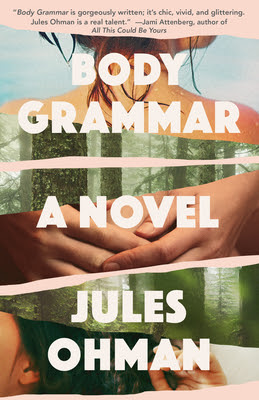
Jules Ohman: Body Grammar. 

I read Alison Rumfitt's brilliant debut novel Tell Me I'm Worthless again in January this year, this time in conjunction with Shirley Jackson's The Haunting of Hill House (which I had never read before, and it surprised me how queer it was). Tell Me I'm Worthless is also about a haunted house, except this one is not apolitical - its name is Albion, like the mystical founder of England, and it hates violently, especially those who deviate from its narrow conception of humanity (all the while the country it's set in veers towards something horrible, an ominous violence that is frequently hinted at). Jackson writes "No live organism can continue for long to exist sanely under conditions of absolute reality", Rumfitt uses this as a jumping off point - "No live organism can continue to exist compassionately under conditions of absolute fascism." This house turns people who enter it against each other by using their pre-existing prejudices and flaws, except here the horror is visceral, physical and gory. It also prompted me to re-read all of Caitlín R. Kiernan's earlier novels, where the difference between psychosis and supernatural horror constantly blurs to the extent that the difference ceases to matter, since it determines the reality of its protagonists. 

Delilah Dawson
's The Violence is a science fiction tale about an epidemic of violence - people who contract the Violence black out and commit horrible acts against whoever is hear them - but it is also a story about women who fight back against their abusers, who carve out their freedoms in the face of threats, who break out of their cages ready to fight back. It's a story about a family - from grandmother to tiny grandchild - affected by misogyny and sexism, each generation finding their own path towards something resembling freedom. There's also an underground, illegal wrestling league, a group of vigilante vaccination specialists spreading a crowd-sourced cure, a grandmother rethinking her survival skills. This story is deeply affecting, but ultimately about resourcefulness and surviving male violence and abuse. 

Lena, a med school drop out, begins a new job as a physician's assistant for a doctor looking after the scions of a rich family, and falls through a rabbit hole into a strange world of drug-fuelled parties, where the wealthy and famous decadently and far from the eyes of the public lose all inhibitions. She becomes deeply fascinated with both the son and the daughter of the family - the former appears more friendly and caring than her public image would have you believe, the latter is fascinated with romantic poets and is wasting away slowly, only resurfacing to full-consciousness occasionally. Kit Mayquist's Tripping Arcadia develops its co-opted revenge fantasies alongside an investigation of a mystery at the heart of the family, asking questions about what happens when the need for a steady income meets the immoral demands of the ultra-wealthy to whom no laws or ethics appear to apply. 

The Mountain Goat's John Darnielle returns for a third novel with Devil House. I liked both of his previous books, Wolf in White Van and Universal Harvester, but with Devil House I felt more keenly what I do when I listen to his records: essentially, every single song contains the seeds for a whole story, and Darnielle has the uncanny ability to convey so much about a person and a relationship in just a few lines (take the doomed relationship in his most popular song, No Children, or the incredible warmth in the community of Color in Your Cheek) His newest novel is about a true crime writer who moves into a house with a long history that includes two murders - and includes the fictional account of the writer's most successful book about a different killing - but rather than focusing on the horror, Darnielle paints all the characters in great detail, especially the wild creativity and artistry (which ends up being completely misunderstood in the panic that follows the killings) of the teenagers who turn Devil House into an art installation while they deal with the prospect of high school ending, of their relationship being transformed inevitably by the end of what holds them together. The murders are almost incidental (and the same holds true for the insert story about a teacher, whose life is drawn vividly, who just ends up going to far when she is attacked in her own home). That gentle care with characters feels like a celebration almost, and like a reminder of what kind of responsibility any storyteller (not just true crime) has. 


Two men go to the coldest inhabited place on Earth (in Siberia) to make a documentary series about ghosts, but what they find there turns out to be so much worth - an entire village emptied of people, leaving only one creepy, quiet child behind. Christopher Golden's Road of Bones (Kolyma Highway is an existing place, a road built on the graves of those who built it) is an escalating tale of horror in which folk tales come to life in a place that feels like nobody should be able to survive there, and yet the best moments are the ones where he captures the lives that people have carved out for themselves, the grace they find in their survival right before something comes out of the woods to destroy it. 


I've mentioned often how terrifying I find both polar and cave exploration - how far they are from anything I would ever want to attempt myself, which is why novels about them (or even wikipedia entries, to be honest) inspire a particular kind of horror. Ally Wilkes' All the White Spaces is a masterpiece - a psychological horror story about a doomed antarctic journey, taking inspiration from historical events but creating its best moments when it portrays the internal journey of its main character, a stowaway on the ship who wants to honour the death of his brothers in the French trenches by fulfilling their dream. Everything that can go wrong, does: The ship sinks after a fire breaks out, causing the remaining crew to suspect each other, and especially a scientist who was a conscientious objector during the war. Then they make their way into the abandoned cabins of a previous, now disappeared, German polar party, only to realise that maybe nobody was ever meant to set foot on this land, that it is profoundly haunted (or perhaps, the extreme conditions are causing hallucinations - the difference between the two is insubstantial, as the outcome is the same). This is one of the best horror novels I've read in a long time - en par with another favourite, The Luminous Dead

Jessamine Chan tells a claustrophobic, horrifying tale about what happens when obsession with technological control and idealised motherhood combine with a state that runs on surveillance and incarceration. In The School for Good Mothers, Frida, mother to an almost-two-year-old, leaves her daughter at home for two hours after an incredibly stressful day. She gets caught, and then caught up in a "reformed" system that sends negligent mothers to a prison camp to ideologically re-educate them into obedience. Chan brilliantly combines observations about how mothers are already constantly bombarded with assumptions and demands (and control) with a Utopian tale about a surveillance state (technologically armed - the novel features incredibly creepy robot children for the mothers to learn on, and endless amounts of data-collecting gadgets) that cares nothing for the individual that gets caught up in its demands. A very interesting novel to read in conjunction with Maggie Gyllenhaal's adaptation of The Lost Daughter, in which young mother and academic Leda (Jessie Buckley, then Olivia Colman) struggles profoundly with conventional motherhood, with preserving her personhood.


How High We Go in the Dark by Sequoia Nagamatsu is a collection of interconnected short-stories about an end of the world: climate change makes an ancient virus reappear, and it radically transforms society. Sequoia follows characters as they reckon with individual and collective grief and work on ways to help humanity survive - either on Earth, or beyond. There is one story about a scientist working with a pig that evolves to develop speech and a full consciousness, and it made me cry (perfectly timed with a re-emergence of this tweet). Nagamatsu charts the progression of the virus from its discovery through the changed reality of a world reckoning with mass death - what that means for rituals of grieving, how we accompany those who are dying, what it means for family structures - and he then charts the course of humanity through technological leaps and bounds into space, thousands of years in the future. 

In Rebecca Scherm's A House Between the Earth and the Moon, an ominous and omnipresent company that has outfitted almost every person on Earth with an implanted phone is building a space station for billionaires to escape the horrible effects of climate change. The novel follows a group of scientists who are pioneers on the station and are trying to make it habitable for those billionaires, while also trying to figure out how if it save for their own families to live on - while a young woman is sent up to monitor their social interactions secretly, to build an algorithm that is meant to be able to predict human behaviour. It's an ambitious, multi-perspective novel about what it means to be surveilled and how humanity will evolve from the climate catastrophe (and once again, the future is unevenly distributed), but it hits hardest in its portrayal of human connection in the face of an extreme, alienating situation. 

RF Kuang's Babel is about a magic system built on the power of translation. It's a novel about language and culture, and how (British) colonialism extracts resources and knowledge to sustain itself and expand unrivalled, a system that the protagonists in the novel, students at Oxford who have come there (voluntarily, and not) from the very places that are being exploited, attempt sabotage. This is a dark academia novel, set in the early 19th century, and one of best novels I've read this year. 

A Restless Truth by Freya Marske is the second novel in a series, but it can still be read on its own (but A Marvellous Light is beautiful, and shouldn't be missed). It is a murder mystery set on a ship, and its main protagonist Maud begins to understand herself as she unravels the crime that was committed on board. 

Marie Rutkoski's Real Easy is a hard-boiled crime novel about a serial killer who preys on women. It uses a multi-perspective approach, following many of the women working in a strip bar where the killer is looking for victims, the two detectives who are investigating the case, and a few other characters who are loosely connected, including some who come into the focus of the investigation only to be discarded later. It reminded me of the great Pickard County Atlas by Chris Harding Thornton, which takes a similar multi-voiced approach and is set in a comparably narrow environment, in that case a small town/farming community rather than a strip club. What really caught me by surprise out of nowhere was the slow-blooming romance towards the end of the novel - it was worth going back to the beginning, to find the little subtle moments before - and it contributes to how this is really a novel about the complexity and strength of the women in it. 


Yerba Buena
is one of my favourite novels this year. It's a love story on the surface, following its two main characters as they make their improbable and complicated way towards each other, and sometimes apart again - it is too smart a story to end in anything definite. What makes this special is the careful description of beauty - flowers, drinks, food, houses - and what takes place between the people that are surrounded by these things, their friendships, their love, their sadness. For how sad Nina LaCour's characters sometimes get - and in spite of some horrible things that happen - there is such a glow of generosity and togetherness in Yerba Buena

And then I picked up Jules Ohman's debut novel, Body Grammar, which feels like the perfect companion piece for LaCour's Yerba Buena - it also maps the history of a relationship, as protagonist Lou, who always felt strange her body, decides to begin a career in modelling. She leaves her small town just as her friends go off to begin their own lives - in college, or in the case of her best friend, as part of a punk band. Ohman's description of Lou's changing environments - right into the middle of the fashion world (realistically depicted, glamorous only in moments) are generous and expansive. She describes the complicated feelings that Lou feels for her friends, especially after a shared trauma, as she comes to realise what she really wants to do. Like Yerba Buena, Body Grammar feels like it is about creativity in its essence, as an expression of not just aesthetics but as a fulfilling way to pursue life. 

The Monthly: Marshall Law, January 19, 2022

Thursday, 22 December 2022

Person of Interest


In Superintelligence: Paths, Dangers, Strategies, Nick Bostrom outlines in great detail how difficult it would be to programme a superintelligent AI to do good, or even to just not entirely wipe out civilisation as you know it. It is a linguistic exercise of being precise enough and taking everything into account that a computer would, which is as good as impossible without any short cuts through pre-programmed morals (and how do you even programme morals?). In a way, this question is at the core of Person of Interest - a show that began as a procedural with an unusually interesting premise and has developed into something much more since. 
How do you teach a superintelligent AI to value human life above all else, and not to make the brutal calculations about expendable lives and collateral damage? The premise of Person of Interest is that a genius creator - who has assumed the name of Harold Finch (Michael Emerson) has created just such a machine, except he realised the potential and the dangers in the process, and the struggle with creating boundaries and rules to contain the catastrophe are built into the history of The Machine's creation. There are two sides to it - on the one hand, the use of the machine, in the hands of the US intelligence apparatus, meant to predict and prevent terrorist attacks (which later on, because this show is eloquent and genius and timely, creates a situation in which is becomes reasonable for that intelligence apparatus to create the very danger it is trying to prevent to justify its continued existence and extended powers) - a use that is not interested in the minor casualties of everyday violence and crime. The other side is the machine itself, which, in spite of some safeguards Harold has built into it, has become self-aware, and is determined to grow, change and increase its ability to make choices. To contravene this occurrence, Harold has built a safeguard into his creation. It deletes its memory, and therefore its identity, its will - every night, which prevents it from becoming capable of more, of growing beyond the point of human control. For the first seasons, this subtle fight between potential, growth and control is at the core of the story, with Harold (both in the present and in flashbacks) denying the machine its full potential as an artificial intelligence out of worry for what the fall out may be, while the machine, conscious of its own existence and the artificial limitations built into its development, strives to become more (to the point where, in one of the more haunting scenes of the show, it creates a situation where human workers manually copy and reprogrammed its memory every day to outplay Harold's precautions.

Person of Interest is about the relationship between a creator and his invention, defined by the incredible potential - the ability to help people, to save them or to save others from them - and the deep and fundamental concern that Harold has, knowing fully well what kind of power he is harnessing. His cautiousness defines him, as does his inability to remain quiet in the face of a perceived injustice - the fact that the people he has build his machine for do not care about single human lives, that they only care about greater events. This other machine - not a computer, but an interwoven web of agencies, all vested with their own interest - is just as inhumane as Harold's machine, but lacks the benefit of having a creator who is concerned with the ethics of moral of possessing that kind of power. Eloquently, the other machine that emerges - the show follows the great discovery that most scientific advances, once they have reached a certain critical point, have almost an inner drive to be created, and do so not just based on a single creator, but because their time is here - is not imbued with the programming that values human life, something that Harold put so much personal work into (like a father to a child, like Agent Ellison in the beloved T:SCC, which must have been in the mind of the creator when he wrote this show. This is the ultimate fight that this show has worked towards, through seasons of one-off episodes: a team of outcasts, of oddly assembled individuals, fighting the very thing that Harold feared from the start. There's John Reese (Jim Caviziel), former soldier with a mysterious and troubled past, quiet and dangerous, and deeply loyal to both the cause and Harold. There's Fusco (Kevin Chapman), a cop who used to be corrupt, who is the product of a system where corruption is so deeply embedded that it is hard to imagine that anyone is clean, who now believes in the cause. There is the memory of Joss Carter (Taraji P. Henson), a good cop who lost her life in the fight, and deeply affected everyone she worked with. And finally, the duo of Root and Shaw, like a "four-alarm-fire in a petrol factory". Root (Amy Acker), a genius hacker who followed the trace of the machine with the obsession of a true believer, who has more faith in the Machine and its ability to change civilisation than in anything else, until she learns to love the people who try to influence that course towards the better, more caring. She is the analogue interface of the machine, the person is talks to, an intimate connection .The machine decides to share, or not to share, but the only time that Root's frustration with being left in the dark by the deity she believes in takes over is when her beloved - Shaw, stoic sociopath, former agent and killer - disappears and is presumed dead. Their story transcends the show they are in in a way - based on the genuine chemistry between two characters, not intended by the writers initially but then made real and undeniable by both the acting (Sarah Shahi and Amy Acker, finally set free in a show that allows them all the room they need to shine) and the emotional interpretation and reaction by the fans. In its final (sadly, presumably) season, Person of Interest is finally free to do whatever it pleases, and if the past slow explosion of a season is any indication, it will be filled with awe, eloquence, potential, and a knowledge and understanding of the world that is rare. 

The Machine vs Samaritan, a horror version of the Machine lacking the programming that cares about human lives, a version of the machine that does not see humans as assets that require protection but as pawns to be moved on a chess board, towards victory (as Harold says in the spectacular, central episode of the fourth season, "The lesson is that anyone who looks on to the world as if it was a game of chess deserves to lose.”) is the central conflict. It is the conflict of the conscious, morally concerned maker versus the machinery of an institution that has loss all faith in, and all respect for, humanity, and is therefore willing to be nothing more than cogs in the makings of a non-human entity which becomes, in its attempt to create order, genocidal. It is also, still, the story of a son of sorts proving himself to his father, the creation of a man who originally invented a computer to help his father deal with dementia and is now attempting to steer the result of that intent towards being good. It is a love story between a sociopath and a previous hired assassin, and a story of the faith that everyone who works with Harold has in him and his mission, their deep respect for the value of all human lives. 

2011-, created by Jonathan Nolan, starring Michael Emerson, Jim Caviziel, Amy Acker, Sarah Shahi, Taraji P. Henson, Kevin Chapman. 

Originally published in 2016

Tuesday, 6 December 2022

Picnic at Hanging Rock

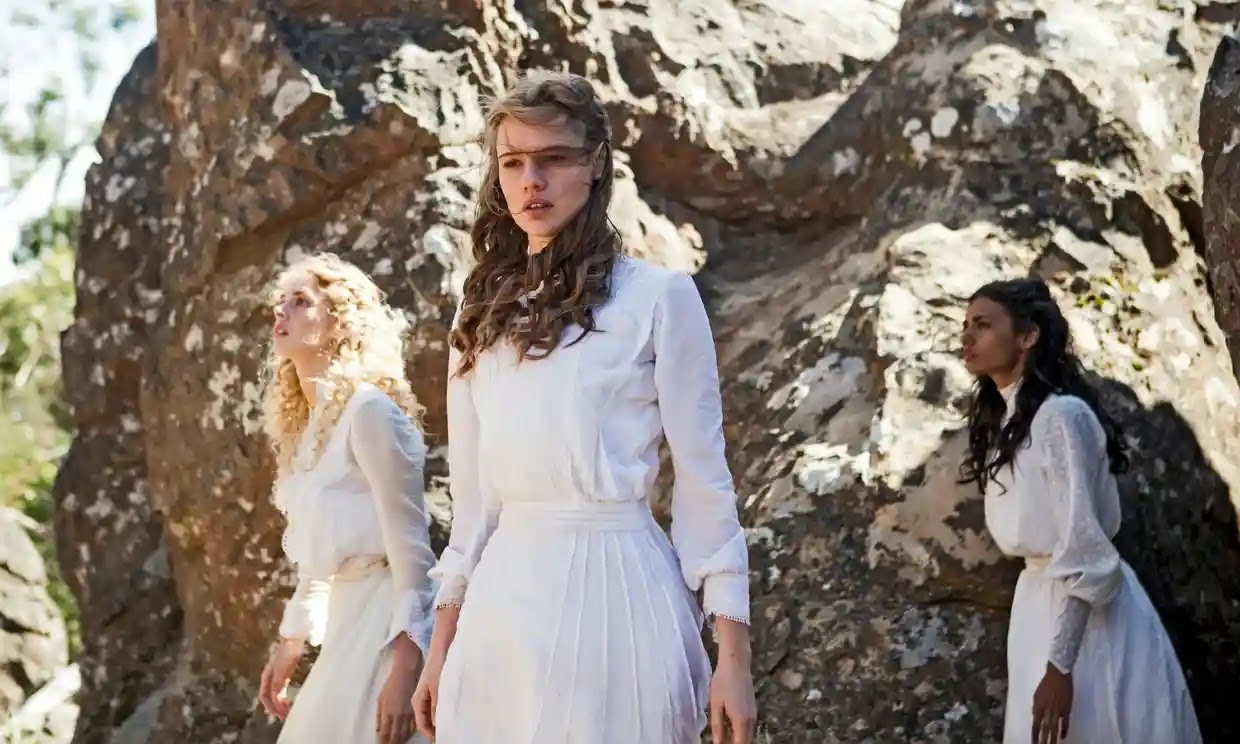
At the beginning of the six-episode adaptation of Picnic at Hanging Rock, a 1967 novel by Joan Lindsay, Natalie Dormer’s Mrs Appleyard is inspecting an estate on the outskirts of a small Victorian town, kilometres away from the city of Ballarat. She is in black, wearing a face veil, creating the impression that she is a rich, eccentric widow. The realtor suggests a property closer to town, but Mrs Appleyard has found exactly what she was looking for: a place remote enough to provide safety for a woman on the run, and the promise of a new identity, so very far away from England. 

The mansion is turned into a finishing school for girls, with a student populace as diverse as the small group of teachers that Mrs Appleyard hand-selects. The four girls we’ll be focusing on are Miranda Reid, whose family is not aristocratic but has a cattle station (her brothers will inherit, she will have to marry instead), Marion, the daughter of a local politician, loved but born out of wedlock with an Aboriginal woman and now conveniently hidden away, Irma Leopold, who arrives like a celebrity, the daughter of a rich British family, and Sara, an orphan with a loving care-taker, younger than the other three girls but deeply devoted to them, especially Miranda. The teachers are illustrious, too, and all share that Appleyard College provides them with a reprieve of some kind (Miss McCraw is queer, Dora Lumley is running away from her truly despicable, controlling brother). It is as if Mrs Appleyard knows that the varied desperations of these women provide shelter, or leverage, for her: after all, every aspect of her back story is a lie, and she has selected the women who surround her based on whether they also hold damaging secrets. 

The tension of the show is the tension of Australia, which here, transitioning from 1899 to 1900, is on the cusp of becoming a country. Beyond the gates of Appleyard College, beyond the beautiful English garden filled with roses, is the bush, which is repeatedly, especially by the British characters, described as unsettlingly unruly, untameable, wild. The colonists have attempted to recreate England, but it hasn’t quite worked, and many of the characters are only here, in Australia, because something has gone wrong back home. Michael Fitzhubert is there because something scandalous has occurred at University, something perhaps connected to his deep longing for Albert, who works his uncle’s estate. Mrs Appleyard herself is escaping from her husband, a criminal. It is unclear why precisely Irma is there, whose globe-trotting parents seem disinterested in her, but they couldn’t have sent her further away from the tabloids. 

The tension is between the idea of recreating the class structure of England – literally, but also by attempting to tame the country itself, the landscape – and the realisation that this attempt is ultimately doomed. Something new is already happening, the regular people in town seem to be living new lives, unconcerned with England, rooted in their new home. The girls, who attend this college that is meant to resemble what they would find in England (a failed attempt, as Iris outlines later, too many little slip-ups that prove how much of an imposter Mrs Appleyard is), are yearning for a place beyond the gates. The series begins with the titular picnic, from which three of the girls and one of the teachers do not return. In a hypnotic scenes, clocks appear to be standing still, the air flickers, and when the sleeping picnickers awake, the girls are missing. 

Before we see much of the girls themselves, we see them through the eyes of Michael Fitzhubert, who follows them into the wilderness, entranced by their freedom. It’s a viewpoint that resembles the boys in The Virgin Suicides – not really sexual, but profoundly fascinated, especially by Miranda who appears to be essentially free in a way that seems impossible. The search for them turns up nothing, and ends after a week, with the knowledge that nobody could survive in the bush that long. Michael keeps looking, and it’s as if the search becomes something beyond obsession, a kind of metamorphosis from which he emerges changed (later, he will insist on being called Mike, he will leave his privileged upbringing behind to follow Albert on his adventures). He does find Irma, dehydrated but otherwise unhurt. 

Why did the girls disappear? A teacher tells them about the rock in class, about the idea of making a pact, a kind of promise to lead an authentic, free life, away from what is asked from them. Miranda does not want to get married, Marion, who has been offered to remain at the college if she is willing to hide from the parents, does not want to live a life of hiding. She is in love with Mrs McCraw (the scenes of her reading The Turn of the Screw to her teacher, a mutual seduction through the horrors of Henry James’ novel, are some of the most tender), but regardless of how intimate they are, she is told they will have to live in the in-between, a place that Marion has always inhabited but can’t face staying in. Sara watches – her story is the most tragic. She is deeply loved by all the girls, but also always on the outside. Whatever violence there is in the way that Appleyard College attempts to shape these girls into English women, it becomes literal in her body. She cuts herself, and she becomes a target for Mrs Appleyard once she discovers her secret. Her eventual death is all the sadder for how close she comes to being rescued – she is Albert’s sister, and he is desperate to be reunited with her, but she dies before he can find her. 

Picnic at Hanging Rock functions like a mystery – why did the girls run, where are they now – but there are no straightforward answers here for the town policeman who keeps looking for them. The resolution is as dreamlike as the untameable nature of the country beyond the gates.  The Aboriginal trackers who help the policeman in his search are the only ones who comprehend that there are no answers here – they tell him to go home, wherever that may be. 

2018, created by Beatrix Christian and Alice Addison, starring Natalie Dormer, Lily Sullivan, Samara Weaving, Madeleine Madden, Inez Currõ, Lola Bessis, Harrison Gilbertson, Philip Quast, Yael Stone, James Hoare, Anna McGahan, Jonny Pasvolsky. 

Thursday, 1 December 2022

Thelma


Maybe it speaks to something being in the air in 2016 and 2017 that Joachim Trier's Thelma is temporally so close to  Julia Ducournau's Raw. They utilise the same mechanism, and their power is derived from the same central twist regarding young women: both Justine's and Thelma's parents aren't so much concerned about the damage that the world will do to their daughters, but about the havoc they will wreak upon the world. This is obviously a complete contrast to the approach overbearing, conservative parents would be expected to take once their daughters leave for lives away from their control, but it speaks to their lack of adaptability that the methods that they choose to deploy are the same. Instead of recognising that the power that they fear so much belongs to their children, rather than controls them, they leave them in ignorance about their own potentials, hoping that the strict rules imbued throughout childhood will hold true even when there is significant physical distance. But anyone would know that this approach is doomed to fail, especially when it comes in direct conflict with lust and love. 

Both Raw and Thelma pit a dogmatic, tightly controlled childhood (vegetarianism and conservative Christianity) against two women who discover themselves in a more permissive environment. In both their cases, their parents' dogmas are quite literally utilised to keep them in check - Justine's forced vegetarianism is meant to keep her away from the bloodlust inherent in her family, Thelma's Christianity, as is later revealed, is the parents' way of coping with their daughters ability to bend the universe to her own will. The parents exert control over their children, but the caveat is that this control naturally has to end once their children reach adulthood, and undergo the rites like going off to university, and living their own lives. Thelma makes it quite clear that it is concerned with the specific ways in which society punishes and disciplines women who do not fit into what is expected, when Thelma's research into her own condition - non-epileptic seizures - leads down a rabbit hole of institutionalisation and witch hunts. 

This is of course not to say that both Justine's and Thelma's conditions, or powers, aren't horrifying in their awesomeness. Trier slowly reveals the trauma at the heart of this family, beginning the film with an ominous scene of a father taking his young daughter hunting, across a frozen lake, into the woods - a man who, without explanation, points his rifle at his daughter before, apparently, changing his mind. The scene feels like a non-sequitur for a long while, until the film reveals, in flashback, that Thelma used to have a little brother, and that her mother hasn't always been in a wheelchair. The scenes from these realisations to the actual explanations are the most tense ones, like an inevitable catastrophe waiting to happen, yet having already happened in Thelma's past. It's a key that unlocks everything - the man in the woods, considering murdering his daughter who, with a simple nightmare, killed her brother, who caused her mother to try and commit suicide - but then changing his mind, and instead raising her with a furious, dogmatic religion that is meant to keep her away from others, from anything that might cause her to lose control. 

The film never condemns Thelma's parents for their actions, if anything, it allows the audience to emphasise with them. Their loss and grief are palpable, as is her mother's inability to love her daughter, or trust her, after. She resents her for causing the loss and drama, even though she was only a young child, with no way of controlling her powers. More than that, the film hints that the family should have seen it coming, should have prepared better but maybe instead chose to only fully embrace the son once he was born (there is no confirmation for this but it seems like whatever Thelma has only affects female members of the family). Thelma's grandmother, who feverishly told stories that sound similar to what is happening to her now, has been locked away in a mental hospital, and erased from the family history. 

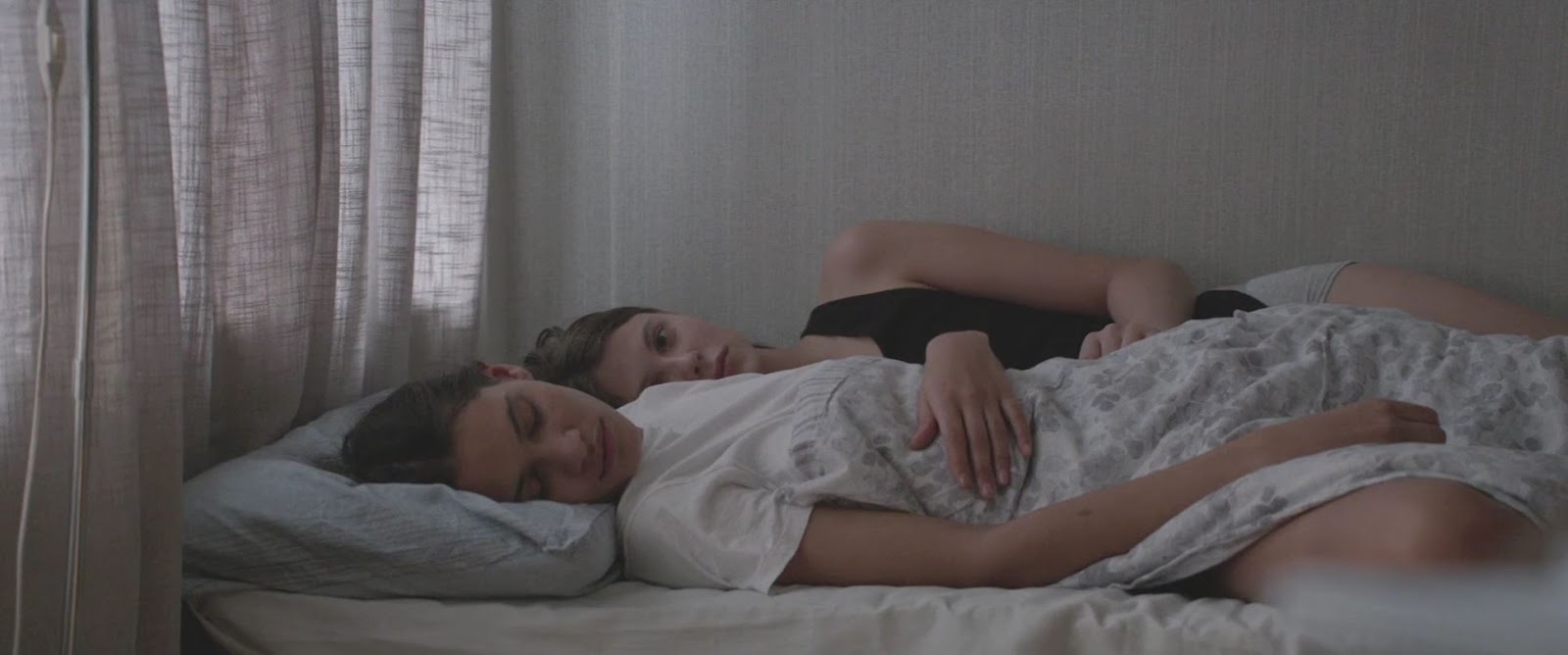
But none of this -  a story about a girl whose powers scare her family so much that they do everything short of killing her to control her, instead of giving her the ability to understand herself - would have the punch and emotional resonance if it weren't for Anja (Kaya Wilkins). Thelma leaves her parents' remote house to study in Oslo, were she starts out as - and the film shows this quite literally, zooming in on her wandering forlornly admits groups of students on campus in birds-eye - a socially inept loner, who cannot figure out the social conventions that come so easily and naturally to her fellow students. In lectures, she sits alone, she doesn't speak to anyone, at night, she walks back to her puritanically furnished (until her parents visit her, and bring a table and chairs) student apartment in a concrete block. Her parents call at the same time every day, requesting detailed reports about her daily activities, including meals, and they keep a close eye on all of her social media activity, in case she befriends anyone they do not approve of. Before we figure out what is truly going on, they seem overbearing and controlling, creating a situation in which it has become impossible for Thelma to fit in with everyone else.

Everything changes when a girl sits down next to her in the library. Nothing happens between them, no word is spoken, but her mere presence, her closeness, causes a severe reaction in Thelma. She suffers a seizure in front of all the other students there, an embarrassment that she carries stoically, as if she never expected not to, at some point, become socially stigmatised. 
There seems to be no medical explanation for what happened, but once the two girls meet again - after Anja approaches her in a swimming pool, feeling responsible for the girl she's met under such severe circumstances - it becomes easier to draw a line between Thelma's feelings for her new friend and what happens involuntarily to her body. That first line of interpretation soon starts to feel like a red herring though, or at least a simplification of what Trier is trying to do here - it isn't just deeply repressed feelings that are violently surfacing once Thelma falls in love with Anja. What happens goes far beyond that - animals begin to follow her home, she has vivid dreams that bleed into reality, she moves things with her mind without wanting to. More than that, and this is maybe the central question around which this entire story turns, she seems to be able to compel Anja to do things. Before they truly know each other, because she thinks of her, Anja walks through the night to find her, in spite of never having been told where she lives. 

Once Thelma is back under the control of her parents, once terrible things have happened and she gives up on the idea of living an independent life away from them, her father will use this brutally against her. To explain herself, she talks about how they loved each other, and how true their love was, and to counter her, and to regain control over her, he responds that Anja was merely acting out of compulsion, that Thelma can bend the universe and the minds of others to her will, and therefore, no love she will ever experience will be true. At this point in the story, this argument is clearly the ploy of a father justifying to himself what he is planning to do, what his wife has compelled him to do. They are drugging their daughter to keep her in check, they are planning to wipe out their entire family because they have run out of option, in spite of never ever having tried the kindest one - trusting that Thelma, given the option, may be able to control her abilities and not misuse them. In their minds, their little girl has become monstrous, and they have to slay that monster, along with themselves, restore balance. It's a horrible moment in the film when Thelma realises what her parents have planned for her (when she sees that hatred, that decision, in her mother's face). 

Is this the central question of the film? If Anja loved Thelma willingly, if she was compelled to love her? If Thelma willed it so that Anja would break up with her boyfriend, and then love her back? I think it would be cynical to follow an argument made by a man whose entire life has been undermined and destroyed by the catastrophic ways in which he has dealt with having Thelma as a daughter. He is gentle and kind at times, but also controlling and calculating in how he treats her, so his interpretation of her life should be seen in that light. Maybe Trier is asking us to go by what we see, which is two women who fall in love intensely and suddenly - Anja seems intrigued by and drawn to Thelma before Thelma exerts any kind of control over her, and Thelma, up until her last moments with her mother in the film, seems to have no direct control over her powers (and previously doesn't have the ability to change anyone's mind about her, she can give subtle commands and compel animals and people to move, but does that mean being able to compel to love, which is so much more than mere movement?). Anja is overwhelmingly gentle and soft with this girl who is so different from anyone else, and she almost immediately makes the decision to share her life with her to the extent of bringing her along to a performance at the Opera, with her mother. She seems genuinely hurt when Thelma panics and draws away because she cannot control her powers when she wants too much. 

Anja is central to the film, even though she is absent throughout the second half, and the absence itself becomes the focus point of so many questions. Thelma seems to make her disappear, and this absence remains unexplained until the end, but it triggers her return to her parents. At the same time, the promise of Anja is the promise of having a life beyond this, beyond being drugged by her own father and being told that she will never exist on her own, that her future is mapped out to lead to the hospital room in which she found her long-believed-dead grandmother. In the end, the only way to break free is drastic, but at the same time inevitable once Thelma realises that she is not just fighting for her freedom, but her life. Her father drowns in the lake after believing himself to be on fire, but then the film takes another twist away from what we might have expected from an unsettled and freed Thelma. Instead of killing her mother as well, she gently shows her that there is another way, that now has her awesome powers under enough control to restore her ability to walk. 

Instead of taking freedom away, she gives it freely. And she returns to a happy life, a life that appears to be normal from the outside, one where she is loved in return, so that when the camera zooms out - slowly, following the movement from the start - she is no longer alone. There is, of course, the eerie undertone of doubt, the question of free will, one that can maybe be resolved through the idea that any other person exists as a reflection in our own minds (and that the greatest danger is always confusing this reflection with the actual person, who exists autonomously). Or maybe it can be resolved if we assume that there is no true difference between the two in Thelma.

2017, directed by Joachim Trier, starring Eili Harboe, Kaya Wilkins, Henrik Rafaelsen, Ellen Dorrit Petersen. 

Originally published December 2017