Season One:

Showing posts with label Station Eleven. Show all posts
Showing posts with label Station Eleven. Show all posts
Monday, 17 January 2022

Station Eleven - Our paths crossed at the wrong time.
Station Eleven: 1x10 Unbroken Circle.
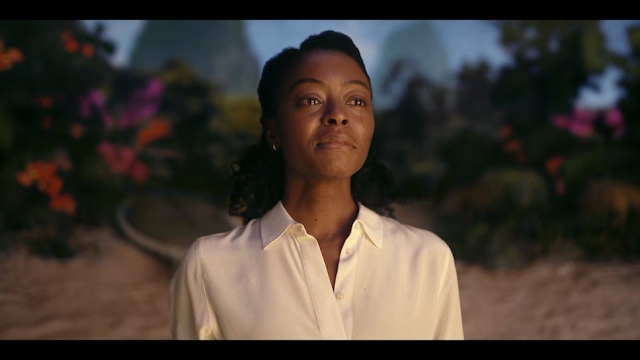
So much of Station Eleven has been about the effect of stories on people. It is named after a graphic novel that couldn’t be any more obscure – Miranda never let anyone see it before she finished it and once she did, she printed five copies, but only gave away two. And yet, somehow, the story of Doctor Eleven’s eternal return to save his only friend and his past self from making a terrible decision has reached far beyond Kirsten and Tyler, the two children who received a copy from Arthur Leander. Kirsten performed it with Frank and Jeevan, finding escape and meaning in it while the apocalypse unfolded around her, while a world she had barely lived in disappeared. Tyler destroyed his physical copy but carried the words around in his head and built a whole gospel out of them for his Children of the Undersea, a religious text shared reverently by those who never knew the world before, and are bewildered by the nostalgia of their Elders, who cannot let go.
That impact is a remarkable achievement for an artist who only ever created for herself, who never sought an audience, who, when asked about what she does, does not tell young Kirsten that she is a writer. Miranda has always had a way of slipping out of people’s lives – we finally hear how she lost her whole family as a child here, how she only escaped death narrowly because she was up on a countertop, colouring, while a hurricane caused a power line to kill everyone she loved in front of her – and since that first trauma, she doesn’t stick around. Clark grieves for her loss and says so in their last phone call, him just arrived at Severn Airport and her sealed up in that Malaysian hotel room – and she says “I don’t stay in touch”. She has seen everyone she ever loved die, but something happens during that phone call with Clark – maybe it’s that she realises that Arthur only contacted her because Clark had that conversation with him about her, that she finished her graphic novel and had it printed because Clark spoke up. She knows she is dying, she is already coughing. But she also brings up a map on her computer and sees that Severn Airport is on an island that is only connected to land through one road, and she realises that every person there can be saved.
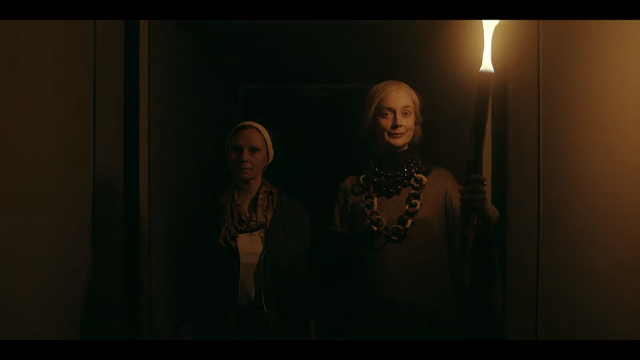
She knows that Tyler and Elizabeth are there, that somehow, even though the world is huge, something has brought Clark to the same place as these two people so intimately connected to Arthur. Miranda asks Clark to protect them, and then does everything she can to help him do that. She leaves her hotel room – after all, once the cough arrives, it is too late for precautions – and goes over to Jim, maybe because she needs his resources, or maybe because she does not want to die alone. This world that is ending is big, but she has made it her career to figure out how to get things from point A to point B and what the best route to get them there is – and she knows that the only thing that is keeping the people of Severn Airport safe is the fact that the virus isn’t there yet, and they are relatively isolated. But we know that there is an airplane idling right there, on the tarmac, that has arrived from Chicago and is likely carrying ill passengers. It has always been a mystery how the passengers of the Gitchigoomie, safe the one man that Tyler brought inside days later, decided to stay onboard the plane instead of making a run of it: and here we see the life-saving mystery unfold. Somehow, Miranda found out the name of the pilot, and his phone number. Somehow she called him, and told him to go against every instinct in his body to not only preserve his own life but also that of the people he is responsible for, and make them stay on the plane. She tells him her story – the first time she does so, previously she has only hinted – and he makes the connection that the people inside the airport are like young Miranda, up on the countertop, safe but forced to see her loved ones die. Miranda says “they’re all ghosts. So am I, and so are you.”, and the passengers remain inside, and Severn Airport eventually becomes the Museum of Civilization. A whole world built through the actions of one woman.
Station Eleven is a story about stories, and what could be a greater companion and contrast to the obscurity of the five-copy-graphic novel than the works of William Shakespeare, still performed after 400 years, after the end of the world! The Traveling Symphony has been released from quarantine and is preparing for its performance, and once her idea of leaving immediately and with Sarah is shut down because a doctor is on his way (!), Kirsten instead takes over and radically changes the production. She replaces Elizabeth as the director and moves the pieces around so that the production perfectly mirrors life, with Elizabeth in the role of Gertrude, Hamlet’s mother and the Prophet as Hamlet. They have a discussion about suffering before that, about the nature of loss, in which Kirsten points out to Elizabeth how lucky she is that Tyler returned, because in this world, “no one finds people from before”. This is of course an ominous statement to make to someone who has not only managed to find her son again, but also somehow ended up at the airport with her ex-husband’s best friend, an ex-husband that Kirsten happened to have known. There are invisible threads connecting everyone, and they will only become more obvious and relevant as the finale nears.

Clark grudgingly allows Tyler out of prison for the performance after Elizabeth tells him that this is the only way to speak to him, as he is refusing to otherwise – to Kirsten, she says that’s he barely knows her son now, that he stares at her like she is a ghost – and of course he casts himself as Claudius, Hamlet’s uncle and the villain of the play. After all, Clark was once an ambitious actor too, before he became the CEO whisperer, and he never really left that resentment over not succeeding behind.
And so the night of the play arrives. Kirsten surrenders all of her knives, gives the one that killed Frank to Alex to look after (Alex gives it to Tyler, who is pondering what he will do with it). Alex tells Kirsten that she wants to stay at the airport for a year, and Kirsten responds that they travel for a reason – “to come back. To come back every single year”, a statement that I’ve thought about a lot, since. Does Kirsten think that the rhythm of the wheel extends protection to both the Symphony and the towns they visit, that the promise of a predictable return is a spell that will keep everyone safe? Is it like a guarantee in a world where, as Kirsten says, you are unlikely to find someone from before, where every new connection is precarious?
Jeevan arrives unseen by Kirsten to treat Clark’s hands, which he injured in the fire, trying to save his Museum, and he is present when Sarah dies – nobody in this episode dies alone, once she goes, even Miranda has Doctor Eleven with her. The Symphony performs Hamlet, and it is beautiful – transformative, revelatory – with the children of the Museum looking on in awe, since they’ve never seen a performance before. Something about it is cathartic, and Tyler comes close to killing Clark, their relationship mirroring that of Hamlet and Claudius. In the moment, in the scene, Clark thinks that Tyler will kill him and he breaks character, telling him that he too loved his father, and instead of running off, Tyler stays.
After the performance, Kirsten shares the secret she has been keeping from the troupe because she thought they wouldn’t be able to get through the night otherwise. Sarah is dead, and Kirsten is finally grieving, but then a girl approaches – one of the Children of the Undersea – and she is carrying a mine in her bag, which she calls a beacon. The Prophet has lit the torch, and so they have all come. And here this episode makes an amazing, surprising decision: because these mines have been such a dark, ominous cloud hanging over everyone, as if all of this could only ever end in violence, these children creating their own interpretation of the world, untethered from Tyler. Instead, Kirsten takes out her copy of Miranda’s novel, and begins reading it to the girl – the sacred text, no longer just recited from memory, but jotted down, touchable.
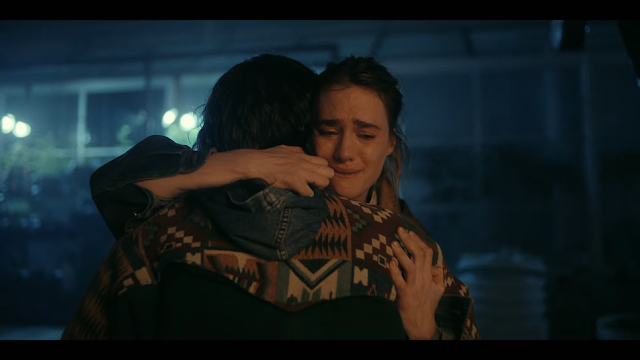
After the play, Tyler apologises for lighting the Museum on fire and Elizabeth says she would have come with him if he asked her to – and so he asks her now to accompany him, and she says yes. After 20 years, Elizabeth is ready to leave Severn Airport and Clark. The Symphony performs Midnight Train to Georgia, one of Sarah’s favourite songs, to remember her by, and during this wake, Kirsten finally sees Jeevan – as if she had conjured him by telling Elizabeth that you never get people back that you’ve lost, a series of impossibilities leading them to the same place almost 20 years after they lost each other. They almost never leave the wheel, but they did to perform at the Museum. Jeevan wouldn’t have come if they didn’t have to call him when Sarah had the heart attack. They meet again, after thinking each other dead, and they can part because they both realise that there is hope of finding each other again. Kirsten will bring the Symphony back to the Museum and Jeevan will bring his whole family to watch a performance, and their unlikely story – a man deciding to make sure that a girl gets home safe, even though he was scared the whole time – will continue to be told, but now without the uncertain ending.
Random notes:
A lot in this episode simply left me speechless. Station Eleven is a great, great book, but I think maybe it is an ever greater series.
Cried through Miranda asking the pilot what message he left – the broken promise, that he’d be home soon, with so many people never making it home, or with home changing meaning so radically. It was also a decision to never show the cabin – we can imagine the misery of the dying, the horror the survivor would have endured before escaping, and then being denied sanctuary.
Glad to see that the soccer team goalie is still thriving!
I am not familiar enough with Hamlet to parse the meaning it holds for Tyler, Elizabeth and Clark when they perform their roles, and work through their issues somewhat, but I trust that it is significant.
The moment where Clark realises that Kirsten is Kiki, someone whom Arthur loves, and that he will finally see Station Eleven, which Miranda always meant to send to him, is so transformative for him – like something is falling into place for him, after all these years, or like a circle closes.
Brian is joining the Symphony! Good for him!
It’s a whole episode that thrives on connections and coincidences, so it is not a surprise that the pilot of the Gitchegumee is named after the hurricane that killed Miranda’s family.
Chekhov’s mines just kind of get left at the airport in bags by the children (and there are SO many of them!), and Tyler and his mother go off with them, to create something new together that isn’t just built on grief and scars.
Wednesday, 12 January 2022
Station Eleven – You’re a Doctor.
Station Eleven: 1x09 Dr. Chaudhary.
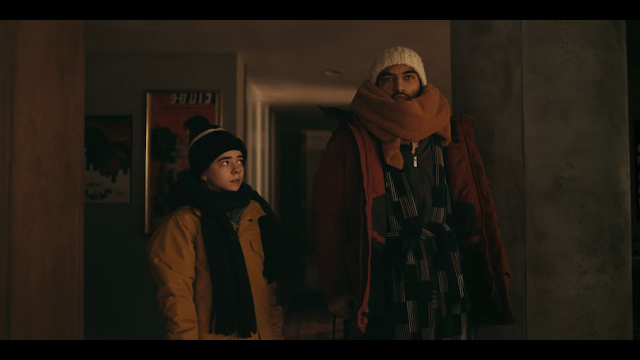
Terry: The courage to bear witness to death is the job, the courage to be there.
It is difficult to make assumptions about how individuals would do if confronted with a world-changing, life-altering crisis – people do tend to surprise you. There are a few occasions in this penultimate episode of Station Eleven where I felt reminded of Yellowjackets, in which a group of teenage girls (and two boys, and one man) are stranded in the Canadian woods, a personal and functional end-of-the-world in a way – and subsequently either show a surprising resourcefulness (sometimes useful, sometimes freaking scary – this really has been the season of Misty Quigley) in light of the situation, or the opposite, a cynical giving-up, and unwillingness or incapability to contribute (hi, Jackie!). I don’t think that you would have been able to predict which will be which from their lives before – sometimes the utter strangeness of radical change has surprising effects.
They moment that I come back to with Jeevan is the first time we met him, when he saw that something was wrong with Arthur Leander, raced towards him, and then couldn’t actually do anything to help. It’s a profound instinct to be a first responder with none of the actual skills to be useful – and this isn’t necessarily a condemnation of him, as it is a valiant instinct, just an observation. In the cabin with Kirsten, we find that moment mirrored endlessly, whenever Kirsten succeeds in picking up new skills, learning to be a great shot, learning the knife skills we have since seen in action, while Jeevan watches, awed and a little bit scared. It’s not that he is useless – he knows how to break down the deer that Kirsten shoots, he has built a safe home for both of them out in the wilderness – but it’s interesting to consider that maybe he wouldn’t have managed to keep himself alive if it weren’t for the now nine-year-old girl that he has accidentally adopted. Jeevan appears to know this all too well, the ambiguity of resenting that he is responsible for Kirsten, can’t just leave her, that almost every decision he’s made since it happened was based on their accidental meeting, and the fact that Kirsten is keeping him alive, both with her company and with how quickly she picks up basic survival skills.
In a way, Kirsten seems eerily adapted to this life already – as a child, she’s now spent a much more substantial part of her life in the post-pandemic than Jeevan has. Jeevan is holding on to something – when he uses the radio and pretends to be a doctor to a stranger (a more ominous decision than he could have predicted), when he uses something they find in an abandoned town to make a make-shift movie theatre out of a car battery, and suggests that Kirsten charge her phone, even though there is nothing left to do on a mobile phone almost one year out (but it is just what you are meant to do when you haven’t had power in a while, right?). Kirsten, when she isn’t distracted by obsessively reading Station Eleven over and over again, notices that Jeevan is living in a different reality than she is, and remembers that Frank told her his nickname: Leavin’ Jeevan. And for a good long time, that’s what the viewer assumes will happen – especially when the rift between the two becomes wider, Jeevan’s resentment over Frank’s death, which he blames on leaving a day too late for the “stupid” play, the fact that Kirsten morbidly held on to the knife that killed his brother. But in the end, Jeevan doesn’t leave Kirsten: he does, in a fit of anger, because he thinks it distracts her too much (and he considers it pretentious, anyway) throw Station Eleven away when she’s not watching, owns up to it quickly and then goes to retrieve it in the middle of the night, without Kirsten, only to get mauled by a wolf. It’s such a predictably absurd series of events that it is almost comical – and luckily for Jeevan, he survives it (not as stoically as my favourite, Van), but before he can make it back to the cabin, a woman (who he was fighting on their exploration of a nearby-town, the ninth person they ever met in the after) returns for him and takes him with her. Since this saves his life in the end, it’s good that Kirsten was too distracted to shoot her back in the town.
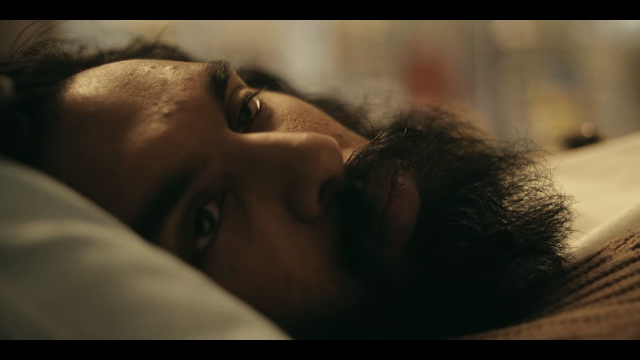
When he wakes up again, he’s in a bed – and it looks like a hospital at first, the kind of place you are meant to go to when you’re seriously mauled by a wild animal, but after closer inspection, it turns out to be a furniture and bedding store. It turns out that the woman who took him there, Lara, is the same one he lied to on the radio about being a doctor, and she was looking for him in the town because this place is in desperate need of doctors – Terry, who later reveals herself to be one of the only surviving doctors in this world because she lost her licence after running a Ponzi scheme (!) has turned this place into a birthing centre, and almost nine months after the big blackout, all of the women there are about to give birth. It is exactly the kind of chaos that Jeevan was bound to find himself in – surrounded by pregnant women, having to pretend to be a doctor so they keep their cool while desperately reading Gray’s Anatomy, while also learning how to walk with one foot.
And of course it takes Jeevan a while to accept the idea that he could be useful here, that he is actually needed, in spite of his lack of qualification, that for once, this first instinct of running towards someone who needs help can finally be combined with the skills to render aid.
Someone tells Jeevan that they are in desperate need for a new words to describe these new relationships, these new families that are forming – he describes Kirsten as someone he just ended up with, but it is about finding a way to think about those people you met just before, just after, like Kirsten, who was trying to count each person they have stumbled across since it happened. There is a woman there who waits every day by the doors for someone who promised to show up for her – and in the end, it’s not the father of the baby, but just someone she met on the way (tragically, she dies in childbirth, and strangely, the man she was waiting for was a boy, Tyler on his journey to becoming the Prophet).
What follows is such a surprising combination of joy and weirdness – a showroom of women, in the throes of contractions, helping others to give birth while giving birth themselves. For this whole year after the outbreak, the world felt like it was overwhelmed by death, so much so that the presence of a dead body is no longer anything to be shocked by – but now, Jeevan is overwhelmed by life. The women laugh and scream – wild joy, and chaos - and he stumbles around trying to be helpful. In the end, there are so many babies – and the one woman, who tragically died, because it would have been impossible to claim that in this post-hospital world, everything could turn out well for everyone.
After, Terry tells Jeevan that her real name is Deborah: in this new world, anyone can be anyone. Jeevan can be a healer, a doctor – all it takes is dedication and learning. And Terry, the former disgraced doctor, has built something here – something that I am thinking will eventually become St Deborah by the Water, our starting point, a safe place for people to give birth. Jeevan leaves and checks once again for Kirsten, but she is not there. She has in fact found the blood-soaked Station Eleven, and drawn her own conclusions, scars she still carries twenty years later. And Jeevan – who has remade himself, who has finally found in his place – twenty years later, has a family with Lara, three children, and saves lives. Somewhere along the way he found a way to heal himself.
Random notes:
There is an incredible, sad beauty to the programmed keyboard that Jeevan finds in the house, where a DJ has used old phone messages to listen to the voices of his kids – and Jeevan builds a story out of it, realising that the man probably died alone, a while after he lost his whole family. It reminded me of Y: The Last Man, and how it handled collective grief expressed in surprising art installations and rituals.
Even the music in this episode is a bit Yellowjackets!
Terry! I really hope this all worked out for her. I’m assuming it did, considering a whole town is named after her, but still.
It's strange to see Tyler in this episode (one of his only lines is "There's no before"), but it fits the way this show uses serendipity. It would have been nice to have one episode without death though - when it comes here, it hits hard.
Tuesday, 11 January 2022
Station Eleven - I wish you were here.
Station Eleven: 1x08 Who’s There?
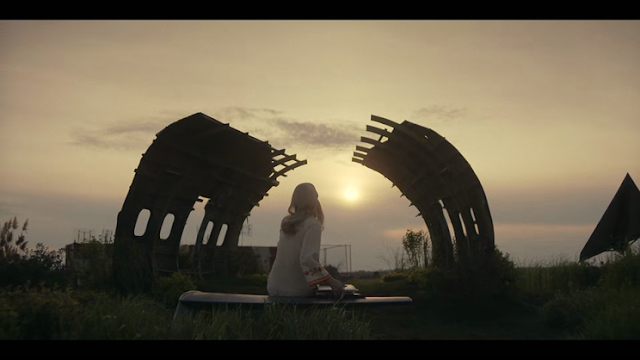
After her journey back to the past, Kirsten awakes in the forest – someone has taken her there, has made a little bed for her, laid out all of her knives, put her on the back of her horse Luli (the same name as her cat, in the apartment) and brought her to safety. Tyler tells her that it has taken three days for her to wake up, and in this time, he has found her edition of Station Eleven. They play out the death scene between them on the way, Tyler remembering all the lines even though he burned his version in his childhood. By the water, a man approaches them with a gun, and Kirsten says that they are “just actors”.
Tyler told Kirsten that there is something evil at the Museum of Civilization, and for now, it is unclear if this is the product of his interpretation of what they do there – preserve the past world in amber – or a more literal meaning of evil. It could still go either way, but the the triumvirate (and now a true one) is still in power after all those years, and Elizabeth and Clark and Miles (the man who captured Kirsten and Tyler) are still making all the decisions. Both Elizabeth and Clark also still firmly live in the past – Elizabeth goes out to the wreck of the burnt out airplane where she thinks Tyler died, and talks to him, looking for forgiveness or a connection, and Clark teaches the young children who have never seen the world before the pandemic about objects from the past that have lost their meaning now, like karaoke machines. It’s a weird idea, trying to teach nostalgia for something that these children have never lived through, trying to preserve the world that Clark misses by attempting to transfuse that feeling into his students. Almost right away, there is an obvious conflict between Clark and Elizabeth’s attitude towards the Symphony: Elizabeth is busy replacing the Conductor, organising and directing the troupe, while Clark insists on their strict quarantine protocols, as if the illness hadn’t disappeared years ago (Elizabeth asks “Nobody is sick anymore, why do you have to scare children?”). Later on, he will share his worry about the choice of play, saying that it is dangerous to allow the children and teens experience anger and questioning of authority on stage – and it becomes increasingly clear that Clark’s main concern is his grasp of power, which is slipping away slowly over time as the world changes into something he no longer recognises.
But is that, by itself, evil? It is by the Children of the Undersea’s ideology of “No Before”, as these people of the Museum of Civilization live for the past, and Clark doesn’t want them dragged into the now. It is maybe also evil because Clark’s fear, beyond his ideological drive to preserve the past both in his Tower that houses the museum and in the minds of the children at the airport, is that others out there will realise the riches held at the museum, and want their share in them. This is the only place we have seen so far that still has electricity and all the modern conveniences of the past.

When Tyler and Kirsten are brought to him, Clark appears to be obsessed with proving their identity, making sure they aren’t dangerous intruders – but ironically, the test he fashions to prove that they are actors is precisely cut out for Tyler to pass. He knows Hamlet – after all, both of his parents were actors. His role as the Prophet is basically a performance. Kirsten and he play out another scene from Station Eleven for Clark, hitting all of their marks, and distracted by the transcendence of the performance (later, Clark will marvel at the pure power of it, even without a stage or costumes), he misses that Tyler is placing things all over the Tower. The performance transports him back, and he realises that he knows Kirsten, that he met her the last time he ever saw Arthur, when he visited him during the rehearsals for King Lear. Back then, he also tested Kirsten, maybe because he didn’t really like children that much and resented how much Arthur seemed to like her, maybe just to play a game: and back then, too, Kirsten knew all of her lines well.
Clark thinks he is careful and protective of his community, but he is distracted by how much Kirsten’s presence transports him back. It’s their shared connection with Arthur that does it, and Clark doesn’t even know yet, never realises, that Tyler is right there. His last memory of Arthur before he executed his will pops up, unbidden, clearly profoundly painful. He was nine years sober. He was in a solid, supportive relationship. And yet, one single day was enough to negate all that – watching Arthur perform as Lear, his talent that Clark thinks he never earned, while Clark himself is stuck in some managerial nightmare, the “CEO Whisperer” as far from the edifying stage as he could possibly be, propping himself up by telling himself that this world is more honest. Once the night is over, he’ll wake up naked next to Arthur’s bed, the remains of an 8 ball on a mirror next to him, his sobriety lost. Whatever Clark’s demons are, nobody triggers them more effectively than his old friend (who conveniently forgot about Clark’s sobriety, who pushes all of his buttons, asking him how he can live his current life when he used to be a violin player in a punk band). Before the harsh light of the morning, they debate art – Clark argues that Arthur surrounds himself with artists because they never push back against him, because they don’t take him seriously (he is a “movie star”, not a serious artist anymore). He is bitter and angry that he lost his friend Miranda when Arthur divorced her. Miranda created because she had to, not for an audience, not to seek greatness. She had to make things, for herself, regardless of whether her words would ever reach anyone or not. But the next day, Arthur dismisses him – Elizabeth and Tyler are here, and Clark is an embarrassment to him now.
Kirsten reunites with the other actors but finds out that Sarah had a heart attack, is being cared for somewhere else in the airport, that they are not allowed to see her. She immediately assumes danger, points out the barbed wire fence around them. The last time she allowed a place to become a home, a man staggered in and killed Frank – all those things that the other actors love here, the safety, the promise of a warm home during winter, are things that Kirsten deeply mistrusts. Alex insists that they must perform, because the people at the airport have never seen a play (she is simplifying, obviously – the children here never have), but Kirsten wants to find Sarah and run. And then, as Alex tells her about Elizabeth directing them, she puts it all together – she remembers Elizabeth, and she realises who Tyler is, how he has come to know Station Eleven so intimately.
Tyler helps Kirsten find Sarah, and she watches her from a ventilation shaft, speaks to her. Sarah tells her to not tell them that she’s dead until after – after the performance – and that Kirsten has to get better at saying goodbye. And then there is a literal fork in the road: she can stay with the Symphony, or come with Tyler. She leaves with him, follows him outside, where they talk about their first 100 days after, where Kirsten tentatively speaks of being a child and meeting Arthur – loving him – to confirm that he was Tyler’s father. They never met back then because Elizabeth and Tyler were late to the premiere. Tyler explains to her that the moment that changed everything was when he tried to help the man that escaped the plane, took him inside the airport, and was locked up in quarantine after Miles shot the man – it’s as if the considerations that led to this indict the Before, as if it undermined any trust he may have had in Elizabeth and Clark. He releases Kirsten from the Undersea, sets the paper plane monument built to the demonstration of The Museum of Civilization’s cruelty, and finally sets off the charges he hid in the Tower, in the Museum. There is no Before anymore. The torch has been lit for the Children of the Undersea, and they are on their way.
Random notes:
In the flashback, after Kirsten and Clark first meet, Arthur tells him that Kirsten’s life is sad, but you can’t tell – will we ever know anything about Kirsten’s life before she came with Javeen? Is this why the relationship with Arthur became so central in her life, why, once she had Station Eleven, she found so much meaning in it?
Kirsten: Arthur gave me Station Eleven, and when I read it, it didn’t matter that the world was ending. Because it was the world.
Throughout the episode, Clark (who lives with Miles now, quite happily, in a space of their own) is overly concerned with how he is perceived, if he is still liked, as if his tight control over what people at the airport know could preserve what he means to them.
It is heartbreaking to see all the hope that Elizabeth has in gaining her son back, except obviously none of this is going to end well.
Saturday, 8 January 2022
Station Eleven – This can’t last.
Station Eleven: 1x07 Goodbye My Damaged Home.
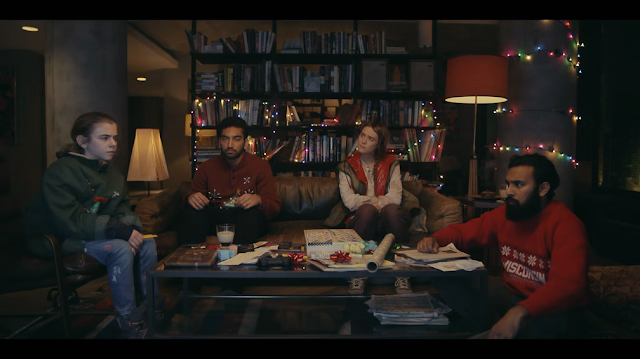
I remember damage. Then escape. Then I found it again. My home.
Goodbye My Damaged Home feels like an extension of Kirsten’s theory that she shared with the Prophet right before the Red Bandana attack: that Station Eleven’s child rebel leader is also Doctor Eleven, stuck in a time loop, trying to fix the greatest mistake of his life. Delirious from the poison dart that hit her, Kirsten dreams of her younger self, and eight-year-old Kirsten claims to have an antidote. But she hides it, and forces Kirsten to look for it, a journey that transports her back to the past, to the three months that she spent with Jeevan and Frank in the Chicago apartment.
The question of what happened there, what damaged Kirsten observed, what pushed Jeevan to the edge, has shimmered on the edge of all of Station Eleven. Somehow, from that experience, only Kirsten and Jeevan emerged, and somehow, they both did so with deep scars, causing Jeevan to eventually disappear on Kirsten. The journey backwards in time, the loop, is ambiguous: on the one hand, Kirsten observes things that she missed as a child that would have gone past her because she did not yet have the knowledge and experience of adulthood that she has now. On the other hand, we see things that Kirsten had no part of – Frank’s frantic preparation of the apartment when he finds out from his sister that his brother is coming, scenes in rooms that Kirsten never entered – and Station Eleven leaves it open if these moments are actually witnessed by adult Kirsten, if her brain is filling in the gaps with guess-work. But then, memory isn’t reliable anyway, especially not traumatic memory, and all that matters here is that adult Kirsten is beginning to make sense of something, under the guidance of her younger self, and she knows it is important enough that she delays using the antidote (fittingly labelled “survival” – which we know is insufficient) so she can witness more of the past.
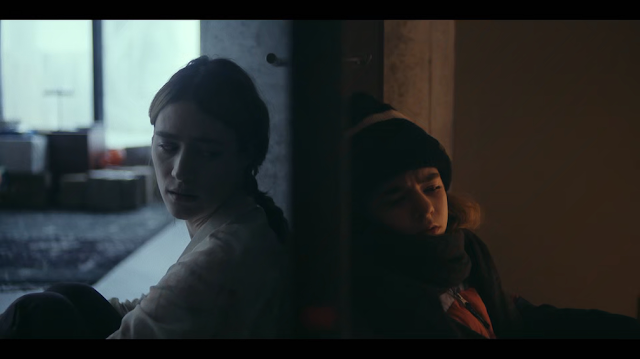
When she lived through the experience of the just-post-apocalypse initially, Kirsten was an eight-year-old child – precocious, but still a child. Seeing those first few moments again, we realise that maybe she missed how panicked and sad Jeevan was, how, while she was waiting for a phone call from her parents who were probably dying, or already dead, Jeevan was processing the fact that he would never see the rest of his family again. Frank sees his brother spiralling, and reminds him that they have a child now that they are solely responsible for, and that means pretending they are not scared – because they are adults. Jeevan continues to resent the decision he made – later on, when Kirsten asks him what he would have done had he known about the impending apocalypse, and he says he would have come back to see his family, would have spent time with them before their death, would maybe be here in the apartment with his sister instead of Kirsten. It’s a heart-breaking moment because the only alternative history that Kirsten, with her limited agency, can come up with is wishing her brother had not died before her birth, because then maybe a babysitter had been home, and Jeevan wouldn’t have had to take her with him. It’s a luxury and a curse of adulthood to be able to make decisions, but also to regret the wrong ones. Kirsten doesn’t understand that yet, but she feels Jeevan’s frustration.
This is maybe why in those initial weeks, she builds a closer and more trusting relationship with Frank, who appears to enjoy her company more. We find out more about Frank here – that his injury was caused by an attack in Sri Lanka, where he worked as a journalist, that he has only been getting gigs as a ghostwriter since, that he has developed a heroin habit and is secretly withdrawing now. He is also obsessed with finishing his latest book, or maybe just more aware of the fact that the world has already ended than his brother is, who keeps talking about what will happen after, when they run out of food.

As we get closer to the performance of the play, which is our time-scale here, older Kirsten gets increasingly anxious, trying to convince her younger self not to write the play, because it will delay everyone a day too long. It’s an ominous plea because we do not yet know what will happen, but we do know that nothing here can be changed, that the only thing older Kirsten will gain from this journey is a deeper understanding of Jeevan and Frank. Frank wants to finish his book, Kirsten wants to finish her play, and have it performed, Jeevan is panicking about food supplies, and eventually breaks the seal on the apartment to venture outside. He finds a broken window in a neighbouring apartment – someone’s only way out of this – and a high frequency radio, which back in the apartment only reveals to them that the survivors who are left out there have tales of devastation, warnings about unsafe locations. It destroys something in Jeevan, who maybe had an idea of a normalcy that they could get back to eventually, but it only confirms what Frank already knew. And I think that Frank’s mind is made up at this point already. He knows he isn’t going to leave, not just because of his injury, but because this apartment is his home, and he cannot imagine a life beyond it.
Frank: You can’t survive helping both of us. But she can’t survive without you. It’s the only way that you’re not left alone.
The piece that Kirsten has written is Lonegan’s death scene from Station Eleven, and she has cast Frank as Lonegan, Jeevan as Doctor Eleven, and herself as the rebel Undersea leader. It is almost as if by casting them that way, she has foreseen what will happen – young Kirsten, not quite aware of all that was happening in the background, but sensitive enough to guess it. It’s the scene that throws the rebel Undersea leader into the time loop, if Kirsten’s interpretation of Miranda’s book is correct, a moment he will always regret, killing the only person that made him less alone. At the end of the scene, holding a dying Lonegan in his arms, Jeevan refuses to say the last lines, as if this would confirm that he will lose Frank here – and just in that moment, a stranger steps through the door that Jeevan has left unsealed after his venture outside, a stranger with a big knife, who wants them to leave so he can live here instead.
It has been more than two months, and all three of them have been sealed off from the outside world – there could be no more brutal reintroduction to it than a man who claims what isn’t his with violence, because that is what the outside world has turned into. He stumbles in from the cold to find them all in their hand-made costumes. Jeevan sends Kirsten away – she never saw what happened – but we stay in the room with older Kirsten, to see Frank refuse to leave his home, to see the stranger stab him, and Jeevan kill the stranger. Jeevan calls for Siyan to help him, but Frank dies – he shrouds him in his bedroom. And then Kirsten and Jeevan leave, after Jeevan, in the most fatherly way, puts on her backpack and scarf.
Older Kirsten stays for a while, the poison making its visible way through her blood. She told her younger self that this wasn’t her fault – it’s just what happened, and maybe she has only just found that peace in watching this all unfold again. She is still there, twenty years later, when lush nature has reclaimed the concrete walls and Frank’s body is nothing but a skeleton. Maybe this was the time loop that trapped Kirsten, the guilt over insisting on the performance, delaying them one day for it, and never really knowing what happened. She finally gets to say goodbye.
Random notes:
This is as good point as any to mention how good Matilda Lawler is as young Kirsten! And Nabhaan Rizwan as Frank is so good in this episode as well.
Frank creating a beat from tapes sent to him by the person he ghost-writes for, and rapping the entirety of A Tribe Called Quest’s Excursion over it, is one of those magical moments – and it almost makes me wonder if it further deepened Kirsten’s love for theatre, the idea that a performance can be transformative like that.
Frank tells Kirsten the story of his injury, and it ends with Jeevan flying first-class (on their sister’s credit card) to Singapore to be with him when he wakes up. These two brothers look out for each other, and it’s a story meant to tell Kirsten what kind of person Jeevan is, in case she is having doubts, because Frank already knows what will happen eventually.
When Jeevan breaks into the neighbouring apartment, he finds a Liszt’s La Campanella on the piano (incidentally, the piece that the Conductor was playing when Kirsten met her), and the occupant of the home has written “It’s impossible” on it – the piece, or this world? I think maybe here it would be fair to assume that Kirsten's subconscious is supplying some details, is making up a world small enough that Sarah would have lived right there, next door.
Older Kirsten realises here that Jeevan was deteriorating before the cabin, before his brother’s death, was already talking to himself and talking to his sister before the traumatic events.
Kirsten’s first knife is the one that killed Frank, and she still carries it with her.
Wednesday, 5 January 2022
Station Eleven – I won’t ever let it happen again.
Station Eleven: 1x06 Survival is Insufficient.
Kirsten and the Prophet are bound to each other not just by their relationship with the late Arthur, but by the same story, the comic book given to each of them when they were children, but what Survival is Insufficient reveals, when the two of them sit around a bonfire and discuss the book, is that a piece of art has infinite interpretations. Kirsten tells the man she has stabbed, who has asked her to join the Children of the Undersea to retrieve something of his from the Tower of the Museum of Civilization, that the character of Station Eleven is in fact the leader of the Children of the Undersea, trapped in a time loop. Considering that a monologue from that book serves as an entry pass for the Children, it seems monumental that Kirsten understands the story better than the Prophet does (there is no past because of the time loop, Doctor Eleven will forever know, and save himself, they have the same memories).
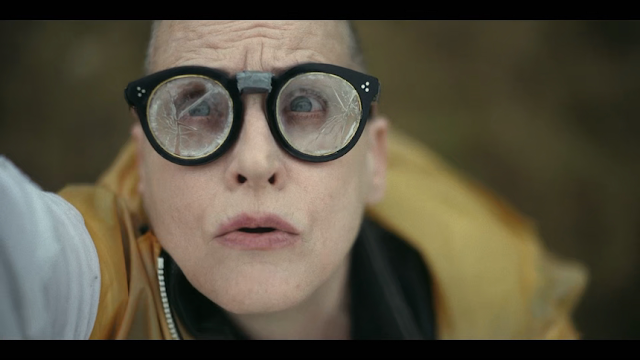
Or maybe it is just a different interpretation, one of many possible ones – Miranda is, after all, no longer alive to share her own. It’s a fitting question to ask as events unfold, as we are given more perspectives to see them from. For example: after the disaster at Pingtree, the man from the Museum of Civilization extends a third invitation to the actors, telling them that the musicians have already travelled there – and a grief-stricken, grieving and now blind (her glasses broke during her performance) Conductor agrees to go somewhere that promises safety. At the same time, Kirsten, who was chasing Alex (who was safe the whole time), has followed the Children, past a morbid graveyard of the Symphony’s names, into the woods, where she is taken by the Children to the Prophet. They do not have to knock her out because she knows the words, and they ask her to help him, because he hasn’t left his hide-out since she stabbed him. She brings him the medicine they collected, but also attacks him straight away – but he tells her that the attack on Pingtree wasn’t his fault, that some of the children went rogue while he was injured, making the story their own, spinning it off into something he did not intend. And he warns her about the Museum of Civilization, tells her that her friends, her family, are in danger from a place that has long turned evil. She agrees to come with him, to gain him entrance there.
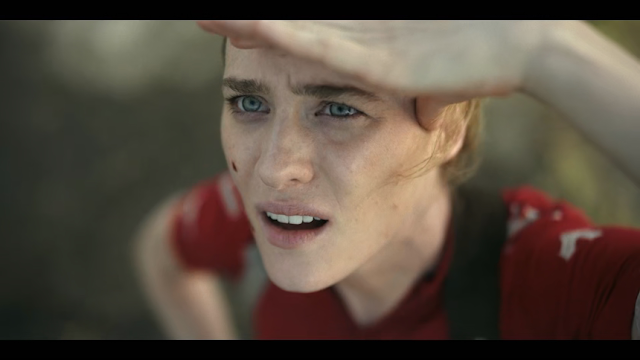
The past plays into the presence here – right when we begin, in the aftermath of the bomb, when Kirsten, traumatised by seeing Gil’s death, desperately tries to find Alex. She lost her once before, when she had just joined the Symphony and got distracted by Station Eleven – Alex, a baby then, somehow got away from her. She promised to never allow that to happen again, and hid the book in Pingtree. Time is a circle of sorts (opening the question of whether Kirsten isn’t something of a Doctor Eleven herself), and once she laid hands on Station Eleven again, she lost Alex.
So the question is, do we believe the Prophet, who we know to be Arthur’s son, do we believe that what Elizabeth, Miles and Clark created at the airport turned into an abomination, too much power concentrated in a group of people that wasn’t entirely stable, and always driven by trauma and pain? He tells a story about his father, throughout his marriage to Miranda, believing her to not speak Spanish, talking about her not loving him enough, only to find out that he never bothered to even find out that she could understand every word. It is easy to assume that his marriage to Elizabeth was similarly fraught with selfishness. What kind of scars would that have left? And same with Clark, who made it clear how much he resented that Arthur was well-liked in spite of his short-comings, that Arthur made a great career even though he was a middling actor, with none of Clark’s own gravitas. Is the Prophet right?
The actors arrive at the airport, astounded that everything still works as it did before. They reunite with the musicians. But Sarah, who had drunk herself into a stupor, who had lost her sight, collapses – and Sayid’s calls for help appear to be to no avail.
And the Children, on their way to the airport, are attacked by the Red Bandanas, a group of fanatics that have haunted the story this whole time – in the flashback to Kirsten as a child, she tells Gil that they have only every chased her, or she killed them. She does her best to defend herself and the others, but there are so many of them that it is hard to see how she will get out of this.

Random notes:
I should have mentioned that there is a lot in ambiguity in how the actors decide to finally accept the third invitation – Sarah appears to have given up on the wheel and want safety, but Brian has also brought people with guns, in case they wouldn’t come quietly. So Tyler probably has a point about them.
One of the older children appears to see in Kirsten an opportunity, and he seems to be less caught up in the stories than the other kids, for example telling her that the children like reality to be explained to them in terms of the prophecy. Unfortunately, he is also the first victim of the Red Bandanas once they attack. Also, early in the attack, Kirsten throws Tyler down a ravine, probably incidentally saving his life (but maybe just because he has previously threatened that his death would mean the end of the Symphony, that he has supporters all over).
I’m not sure what is happening to Sarah – if she was poisoned, or is having other medical issues – it could be that the alcohol she was drinking was bad (the blindness, beyond not having glasses).
What did Tyler leave in the Tower?
Also, the Prophet tells Kirsten how he came to know the prophecy, confirming once and for all that he is Tyler, but Kirsten never tells him.
This is the first time we see all of Kirsten’s knives join the action, and how well she can handle them. And what a spooky delivery there by child Kirsten to Gil – the things she would have had to do to survive.
Friday, 31 December 2021
Station Eleven – Would you die for a stranger?
Station Eleven: 1x05 The Severn City Airport.

Elizabeth: Well played, Marc Antony. You’re a star.
In many ways, The Severn City Airport is constructed like a very subtle horror film. It elegantly establishes an atmosphere that is eerie and unsettling, that builds an expectation of some kind of explosion of violence, which is never quite resolved at the end. There are two sources of that unsettling feeling: The situation itself, the absurdity and weirdness of a small, out-of-the-way airport during the apocalypse, and the character of Arthur Leander’s son, Tyler, who is stuck there with his mother Elizabeth and Arthur’s friend Clark, who hasn’t been close to either of them.
Tyler is a strange child, and because this episode functions like a horror film, the strange child causes a sense of disconcertment, of unease, eventually, of fear. In the beginning it seems as if he is just the product of a messy celebrity divorce, of a man who never bothered or found the energy to really look after the people he left behind. Then, after a while, it becomes obvious that Tyler has something more profound going on, that will feed off the situation and the ideology of Station Eleven to fully emerge as – spoilers – the man that Kirsten immediately knew was fundamentally wrong when she first met him.
But back to the beginning: on the day that the apocalypse reaches the United States, Clark (David Wilmot) is boarding a plane to Chicago to sort out his friend’s will. Throughout the episode, it is obvious how ambivalent his relationship with Arthur was, how much he loved him in spite of their rivalry, in spite of the fact that Clark is no longer an actor (he’s a consultant now – the furthest from art possible), and his sense that Arthur was never very good to the people he purported to love, while being easily loved by everyone he ever met. On the plane, he spots Elizabeth (Caitlin FitzGerald) and Tyler (Julian Obradors) in first class, but when he tries to talk to them, the rift between them is obvious, the fact that Elizabeth blames him for keeping Arthur’s indiscretions secret from her. Arthur has done to her what he did with her to Miranda – betrayed her – and Tyler, a row behind her, has disappeared into his headphones and handheld device, which Elizabeth confuses for not being aware of his surroundings. It later becomes obvious how very aware Tyler is, that he is, in fact, a few steps ahead of everyone when it comes to assessing the situation they are in.
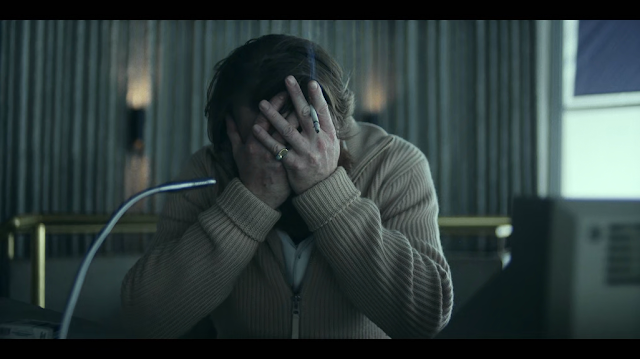
That situation, after a few hours, turns out to be being stuck in an airport during the apocalypse: safe, because none of the passengers are infected, but also trapped, because the outside world is no longer a place that is survivable. Everyone batters down, sleeping rough – Clark begins drinking, and doesn’t stop for a good few days. While Elizabeth refuses to accept the reality of the situation, which is that her celebrity no longer buys her special treatment, new power dynamics emerge, including a janitor pretending to be a Homeland security agent taking off with many of the women with the only remaining pilot, a situation that may look like a catastrophe from the outside, but that is turned into an opportunity by Clark. He reveals the man to be an impostor, and his decision to leave as a blessing, as this means more resources for the remaining people, and a strengthened sense of togetherness and community – and he goes further than that, proposing that he, Elizabeth, Miles (a former security officer) and Tyler form a triumvirate (but with four) of leadership for the remaining people in this place of plenty that provides food, shelter and safety.
Tyler immediately questions their need for leadership, and the rift that will determine the future of this whole world emerges. Clark wants to get back to past greatness, wants to steer these remains of humanity to a “repopulation” of Earth. Hence, more than 100 days later, the emergence of the Museum of Civilization (because that’s what this little airport will turn into): as a reminder of humanity’s past greatness, achievements that it should return to. Before the end of the Internet, Clark has Tyler download Wikipedia, to preserve both useful knowledge and the great artistic achievements (Shakespeare, of course). But we already know where this is headed: even before Tyler is given his own copy of Station Eleven by his mother, he is voicing that maybe humanity shouldn’t repopulate. Looking at the last article he downloaded from Wikipedia (it’s capitalism, of course), he suggests just deleting it, but his mother says that humanity will just invent it again – except maybe, with the kind of radical and absolute change that Tyler comes to desire, humanity will have no connection to the past anymore.
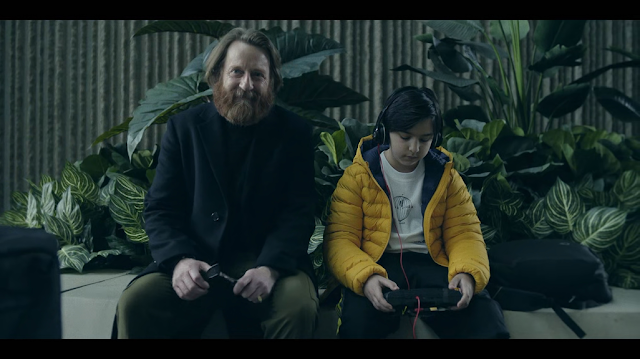
It’s a coincidence that leads to a sharpening in Tyler’s ideology. An airplane that landed after the airport locked down, an airplane that everyone inside assumed was filled with corpses (early on, Clark is asked if he would die for a stranger, and he responds that he probably wouldn’t – the downside of that is watching all those people die in the far distance, offering them no help), discards one single passenger. Tyler knows that this means that the man is immune from the disease, and he leads him inside, where Miles shoots him because everybody panics about transmission. The people demand that Tyler be shot as well, or at least sent to quarantine, where he and Elizabeth end up for a month. In that month, Tyler reads Station Eleven, and becomes unreachable to his mother. In that month, he becomes something that scares Clark enough that he, thinking himself unobserved, should be sent out into the wilderness.
Clark: He’s like you in a way. Bold, indifferent to authority, singular. But he’s a destroyer.
Maybe Tyler overhears, maybe he doesn’t, but he is observant enough that he knows he has to leave. He sets the plague plane on fire, making everyone believes he’s on it, and while Elizabeth wails that final loss, after months of thinking that maybe this is a chance to reconnect while realising it is only making the distance between Tyler and her more obvious, Tyler takes off into the dark. 20 years later, he will tell Kirsten that she will lose Alex first, and then all of her friends, one by one, until nothing is left.
Random notes:
It is funny to watch this and see the janitor pull a Roxanne (with less dire consequences than on Y: The Last Man, and with greater comedic effect).
The scene in which Elizabeth gives Tyler Miranda’s Station Eleven is heartbreaking: knowing the destruction Arthur has caused, she lies about having burned letters from him out of selfishness, but she knows her son recognises lies, she knows that Tyler knows that his dad never bothered to write a single letter to him.
Another heart-wrenching moment: when Clark finally has reception again at the airport after a few days and listens to messages from his dying partner. He allows himself to grieve for a while, and then something new begins with Miles.
Tuesday, 28 December 2021
Station Eleven – But I’m safe now.
Station Eleven: 1x04 Rosencrantz and Guildenstern Aren’t Dead.
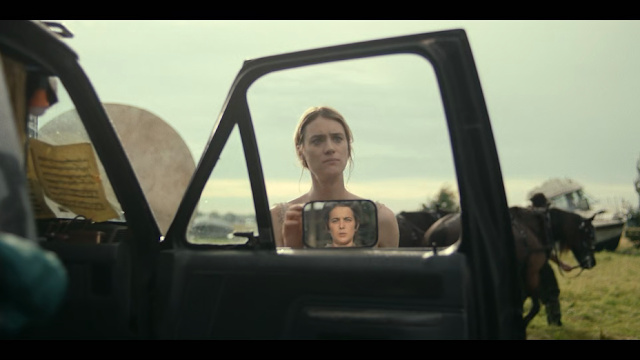
Doctor Eleven drifts in space and finds refuge on a severely damaged space station haunted by its survivor, the captain, who appears to be engaged in an ideological battle about the future with the other survivors, the Children of the Undersea. They disagree over the role of the past, over what they should do in the future. Doctor Eleven remains impartial.
It’s relevant here because when she talks to Alex about David, the Prophet, Kirsten realises that the ideology is the same, that David has built his cult on the idea that there is a fundamental rift between Pre- and Post-Pans, those who remember and mourn the world before and those who were born too late to truly know it, and can’t quite comprehend why the others are so bound up in their grief and longing for the world that was lost. Once the Symphony reaches Pingtree (an old country club, surrounded by an overgrown golf course), there is further proof that the Prophet has a horror-movie like MO – he enters communities and steals their children, which is what he tried with Alex, what he would have succeeded in if Kirsten hadn’t stabbed him.
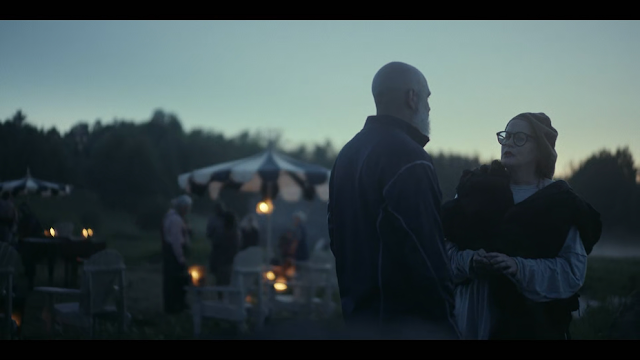
A lot of what this episode does is excavate relationships, and the emotional core is the troubled one between Sarah, the Conductor, and Gil, the former Director who used to be her partner but left her for another woman, and now resides in Pingtree. The Symphony used to have a tradition where it split up, the actors going to Pingtree, the musicians travelling on to the next town, but once Gil betrayed her, Sarah ended the tradition, and the Symphony hasn’t been to Pingtree since. After her conversation with Alex, Kirsten needs proof that Station Eleven is still in the town, because the Prophet has become a mystery: how can a man repeat lines from a book that Kirsten thought only she (and Frank and Jeevan) had ever read, a book so intimate to her that it now feels like it is hers, entirely? So she tricks Sarah into going to Pingtree (by telling a lie about Gil’s new partner having died). When they arrive in Pingtree, they find that the community has reinstalled a minefield after the Prophet stole the two children with the same words that he used on Alex: lines about how they are the first generation to live without trauma, about how the survivors are the only liars left.
We haven’t seen much of Alex before her conversation with David – she is the youngest in the group, the only Post-Pan, who listens to stories about the past as if they were fairy tales – they are interesting, but have no bearing on her life. David’s words resonate with her because she travels with a group of people who have basically made a whole life of the past, adapting Shakespeare plays traditionally, bringing a tradition from the past to each town they visit. Here we see Alex begin to express frustration over it, which is only temporarily vented when Sarah (to impress Gil, who hates Hamlet) lies and tells Pingtree that the Symphony has modernised Hamlet, has brought it to the present times. We know it’s a lie because we’ve seen Kirsten play a traditional Hamlet, and now the troupe has to write and rehearse an entirely new play, in which Kirsten becomes a side character and Alex’ Ophelia turns into the main character who rages against being robbed of her agency, and gets to walk away alive in the end, triumphant. Kirsten is frustrated with that turn of events, in part because she felt so deeply for Hamlet, in part because she is used to being the main event, not the supporting cast.
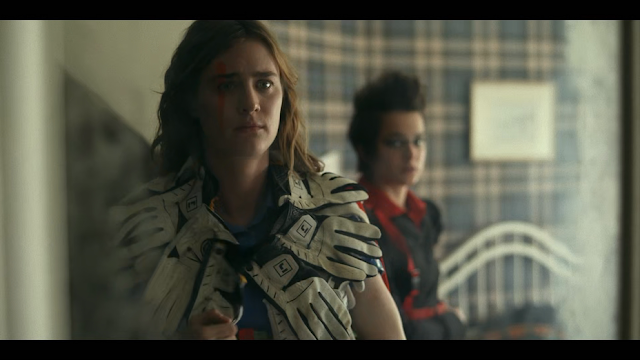
So we have a conflict in the present between Alex and Kirsten about whether the words of the Prophet hold any truth, but beyond that, about how much Kirsten’s protectiveness of Alex actually confines her in a life she doesn’t want to lead. It escalates when Kirsten triumphantly tells Alex that the only reason why she didn’t end up going with David is because she stabbed him, and Alex is shocked by that admission rather than thankful (Kirsten says “you’re welcome”, expecting a thank you that will never come). Soon after, she sees Alex riding off on one of the horses through the minefield, towards the children that have lurked on the periphery of vision the entire episode, after calling the Symphony a “terrified carnival of trauma”.
The conflict in the past is between young Kirsten and Jeevan, and it happens to support what everyone tells Kirsten in this episode: that the words of the Prophet match her own ideology, that she too has these radical ideas about the present and the past, maybe because she was shaped by the same piece of fiction as he was. After all, Kirsten is barely Pre-Pan – she was eight when it happened, and it turned her into something new quickly, something that Jeevan, here at the cabin by the lake, already finds pretty scary. They’ve killed a pack of wolves (which gives Kirsten opportunity to explain how they are the monsters that monsters fear to Jeevan), they’re subsiding in this endless winter, but Jeevan is beginning to express his resentment over a life he doesn’t feel he’s chosen, a life he stumbled into when he agreed to walk Kirsten home. He’s also sad over the loss of his brother that appears to be tangled up with Kirsten, back in the apartment, delaying their departure so that they could perform Station Eleven. In the present, Kirsten tells Alex that she was already dangerous as a kid – fierce, and feral when she finally met Sarah – and now that she is grown she carries knives with her on stage. And more than that, in all of the flashbacks we have seen of her, Kirsten appears to have adapted to the new world well, embracing it after her initial grief over her parents’ death, barely mentioning anything that happened before except Arthur. Alex’s leaving is mirrored in the past, with Kirsten waking up to Jeevan having left her.
In the present, at night, with the community listening to Sarah’s performance of her twentieth symphony, and Gil by himself in his office, with Kirsten grieving Alex, the unimaginable happens: the two lost children return, but they are unrecognisable, and stripped to the very mines that the people of Pingtree buried in their golf course. Gil tries to reach them, but they have become untouchable, and then David’s threat to Kristen becomes true – her friends begin disappearing in the rubble of an explosion.
Random notes:
We see the Symphony’s motto painted on one of its wagons here – “survival is insufficient”, which just happens to be a quote from an episode of Star Trek Voyager (and it feels fortuitous that after Picard, Seven of Nine, who is at the centre of that episode, is once again a current character, not a past one), and also one of the themes of Ronald D. Moore’s (who wrote that episode of Voyager) Battlestar Galactica. After Y: The Last Man, the idea of finding a survivable place, a dignified place, in the apocalypse has played around in my head, and obviously in the world of Station Eleven, that place is the Symphony, just as the place was Marrisville in Y. For the Symphony, there is no greater way to do more than to survive than to perform art – old Shakespeare plays, and Sarah’s new symphonies.
I wonder if the title is confirmation that Arthur (and Clark) were in fact in the Stoppard play together, not Hamlet, which would be fitting – I think Kirsten began considering herself an actress after being mentored by Arthur, but she is a much more traditional actress than he ever was, which is one of the key points this episode makes with the Symphony’s revamped production of a “modern” Hamlet, and Kirsten’s frustrations over it. And of course the title references a modern adaptation, an old tradition in and of itself but previously eschewed by the Symphony.
The envoy from the Museum of Civilization extends another invitation to the Symphony, and is once again turned down, promising to return for a third time – it’s fitting that this coincides with Kirsten trying to find answers in Pingtree, as the answers she is seeking may just be at the Museum.
The scene when the Symphony reaches Pingtree and Gil and Katrina drive towards them in a golf car to tell them that they are standing in the middle of an active minefield (they turn out to be Chekhov’s mines) is so surprisingly light and funny, especially considering what happens later in the episode – and the way that Lori Petty and David Cross perform all of the layers of an old relationship, of knowing each other so well that they’ve already run through all the ways they could hurt each other, is pretty magnificent.
Gil is working on his Magnus Opus, The Great Book of Joy and Despair, an oral history of the world after it ends – he is, in short, everything that David warns the children about.
Tuesday, 21 December 2021
Station Eleven - It is better to not be noticed.
Station Eleven: 1x03 Hurricane.
Survival is insufficient. I don’t want to live the wrong life and then die.
Station Eleven’s first and third episode could exist entirely by themselves, without the context of a television show. They are insular, self-contained stories that are complete, which creates a kind of alternative universe in which Station Eleven is an anthology show like Black Mirror (this is the first example that comes to mind, mainly because of Mackenzie Davis in the great San Junipero), as if the book it was based on were a collection of short stories. And if that were the case, then Hurricane would be the masterpiece, the stand-out, and in a post-2020 world in which television is making choices about whether or not to adapt the virus into its own history, it is one of most captivating examples of a world in which a virus wreaks havoc.
Hurricane is a love story, told eloquently to the inevitable end, tracing the entire history, from the beginnings – a meet-cute, an actor about to become very famous is fascinated by a woman who is drawing, in a world of her own, and begins a conversation – to the end, when the two of them realise they haven’t quite managed to build a life together, that they will not survive their differences. In a way, the episode is a backstory to Arthur’s ominous explanation about Miranda’s (Danielle Deadwyler is a revelation is the role) finished graphic novel – that this is “the asshole that ruined my life” – which makes it even greater that the seeds of that graphic novel are right there at the table with them when they first meet, that the first time Arthur convinces Miranda that he is worth her time is when he offers an astute interpretation of a work that she has only just begun, only to then be given the drawing of a banana in jest, because nobody is allowed to see her great work before it is finished. Miranda follows Arthur into a bar, for his friend Clark’s birthday party – Clark later says that he has often done this before, kept the company of women that Arthur acquired a few bars previously, and she responds (so self-assured, so self-contained), that perhaps she is the one who acquired him – which is of course exactly what has happened.
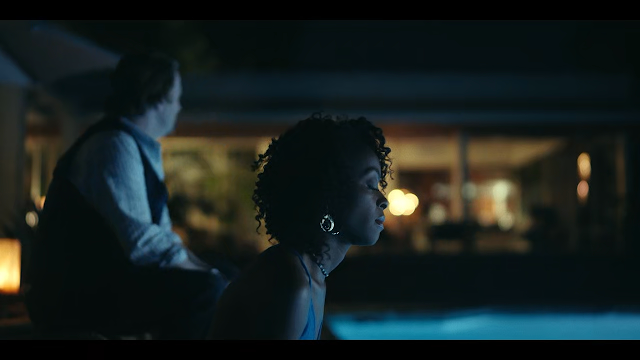
At the party, Miranda was drawing a symbol on a napkin – an anchor being cut, a symbol for cut and run, from her childhood, when her father sailed them around the world. After the first episode, I’ve thought about what kind of person would realise the difference between unnecessary panic and a true crisis, since the uniting feature of both episodes is that in each instance, the unimaginable happens and there are only a few people who realise in time, who see that things will not fall back into normalcy. Jeevan is among those people because he seems predisposed to panic, like his brother, and he trusts the person that delivers the message implicitly. But Miranda – who also trusts the person who delivers the message, it’s Leon, the boss at the logistics company she works for – seems predisposed to cut and run, seems well-prepared for whatever is supposed to happen. After all, it is how she has escaped her marriage to Arthur.
It isn’t just small moments of discord, it’s a great question of whether they are suited for each other – if Miranda can stand the shallowness and superficiality of Hollywood (early into it, Elizabeth, who will eventually become Arthur’s second wife, attempts to reassure her at a premiere that she and Arthur are not having an affair, only to be shut down by Miranda’s “I’m dealing with a supply chain crisis here”), if Arthur can accept that Miranda refuses to share her great work with him, that she spends hours and hours drawing in their pool house, by herself, and then she doesn’t even see publication as the goal here – it’s art for art’s sake, for self-expression, to find meaning, not intended for an audience. Because this is such a great love story, it is predictable that Arthur would so precisely find the worst way to hurt Miranda – not just by cheating on her with Elizabeth, but by allowing Elizabeth entrance into the pool house, allowing her to see her work, violating her privacy. It all comes out at a dreadful dinner party through which Miranda and Clark suffer greatly, where two of the guests are insufferably vapid and derail any kind of serious conversation when it threatens to occur (Praha, one of the women breathes dramatically). Maybe it would be easier for Miranda if Elizabeth were as vapid as their other guests, but she isn’t – instead she is genuinely admiring of Miranda’s work, and articulate about its value and meaning, which makes the betrayal even greater. Miranda leaves and burns the pool house containing the first version of Station Eleven to the ground.
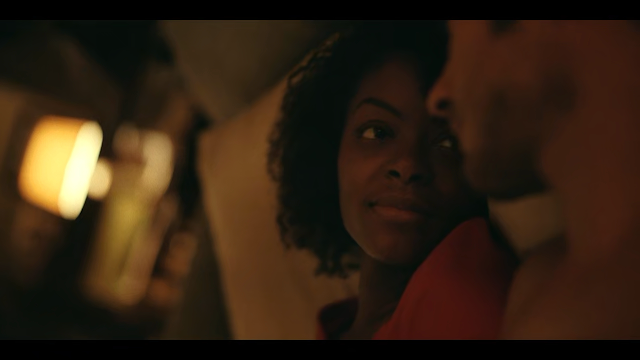
And maybe it’s Leon who lends the theme of the episode when he explains logistics to Miranda: it’s about taking the right path between two points, and that isn’t always necessarily the shortest route. Miranda finished Station Eleven from the literal ashes of her marriage, and delivered it to Arthur (who gave it to Kirsten). She was then sent to Malaysia by Leon, to pitch a Chinese company, but once she arrives at the hotel, she soon realises that things are getting strange. People are hurrying, leaving, wearing masks. Their pitch meeting is cancelled. She eventually receives an ominous phone call from Leon, who tells her that the world is ending, that the internet is censored and isn’t telling the truth, that she has to make her way to the docks to go to a freighter, where she will wait out the plague on the open sea, for at least a year. She has a moment of deep, profound shock, maybe because this lines up with Station Eleven, and Arthur’s interpretation of Dr Eleven as “not lonely, but adrift”. I think that instinctually, Miranda is a lone wolf, but then, situations and people come along that move her to make a connection, which is why she doesn’t entirely follow Leon’s instructions and lets her colleague know about what is happening. He doesn’t believe her in any case, and goes to play a round of golf (later he says, “I went golfing because I thought that’s what a person should do”). The plan goes awry, and Miranda returns to the hotel, and eventually does give her pitch - except at this point, she has received Clark’s phone call, she knows that Arthur has died.
Miranda: It’s a good reminder that nothing we have done, or do, matters at all. But it does. It does. The man I loved died last night and… the man I died last night and I went to work. The man I loved died last night and I went to work instead. And I’m here without and you and you and… why wasn’t I with my love when he died?
It is a compelling monologue about catastrophe, about the absurdity of the situation – the world is ending and yet here they are, in a conference room, pretending to care about logistics. At what point during a global pandemic does the pretence of normalcy end, when can you stop, and admit how much of daily life is bullshit, dead weight, window dressing?
Miranda goes to her hotel room with her complimentary room sealing kit, and closes off the air vents, the windows, the doors, to await the inevitable. Dr Eleven knocks on the door, Miranda and the room reflected in his visor.
Random notes:
This episode was written by the great Shannon Houston.
Every scene of this episode is perfect. Has anyone ever seen a job interview as compelling as the one between Leon, a man who is truly passionate about logistics, and Miranda?
We find out in this episode that a second edition of Station Eleven went to Arthur’s son with Elizabeth – a hint as to how lines from the book ended up in the prophecy the stranger from last episode talked about.
Kirsten tattoo's are the same "cut and run" symbol that Miranda was drawing on the napkin.
What an enormously brilliant decision to cast Veep’s freakishly tall Timothy Simons here, and to saddle him with a golf bag for most of the episode to boot. The awkward, absurd beginnings of the apocalypse.
That fucking room sealing set reminded me of those little gift packs of hand sanitiser and face masks that are just a part of life now apparently – the absurdity of having a global catastrophe repackaged as a little amenity by a global hotel chain.
Sunday, 19 December 2021
Station Eleven: I’m safe.
Station Eleven: 1x02 A Hawk from a Handsaw.
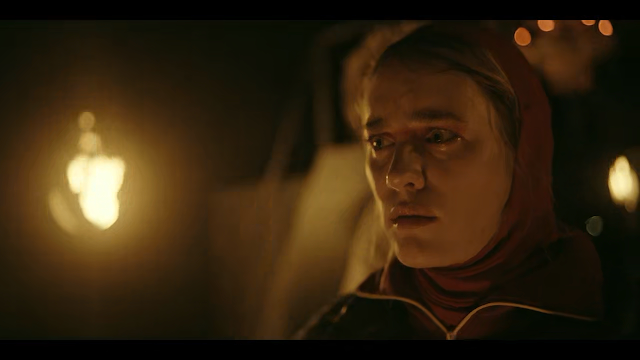
To the monsters, we’re the monsters.
This hasn’t really been a prominent part of the show yet, but I think about what it would have meant for eight-year-old Kirsten to walk into Arthur Leander’s room and be taken seriously as an aspiring actress, to receive advice, to have this experience as a young child. It would be a stand-out occasion even if the rest of her life had turned out differently, if the plague had never happened. We know, from throwaway comments, that Arthur was a film star stretching himself with his performance as Lear on stage, that he was not taken seriously, doubted, but to Kirsten, he must have seemed magnificent. I don’t think that without his influence, she would have proclaimed wanting to be an actress quite so confidently to Javeen when he asked her, or that she would have pursued this goal, against all odds, even after the apocalypse.
The other insight is that in spite of all of that, Kirsten did not have a normal childhood. When we meet her, feral and untrusting, two years later, on her own, when she first comes across Sarah, the Conductor (the composer, working on her twentieth symphony in the equivalent of Now, maybe one for each year), she is a changed person from the one that Jeevan saved. She’s lost Jeevan and Frank along the way, on what we later find out was a gruelling trek across a frozen Lake Michigan. Frank, shown in flashbacks to have a bad leg, didn’t even come with them so far, but we have yet to find out what happened to Jeevan, what haunts Kirsten so much about his death that she discusses ghosts with her friends.
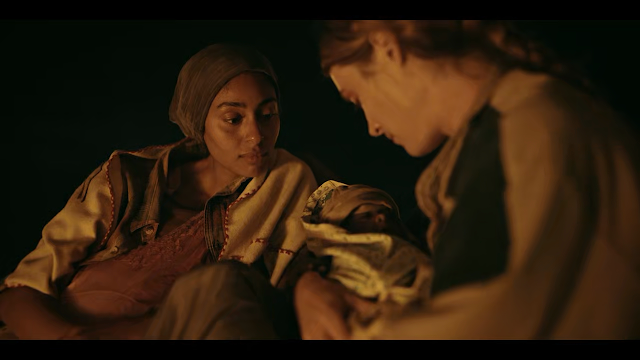
But, in any case, it is a fateful meeting – a girl who confidently declares herself to be a Shakespearean actress (when she says that Arthur Leander taught her, Sarah responds by saying “We can overcome that”) coming across the conductor of the The Traveling Symphony , a Shakespearean theatre company on wheels. Twenty years later, and Kirsten has become the lead actress of the company, famous enough in this world beyond electricity to be welcomed by shouting children when they arrive at the settlement where they will perform Hamlet later. We are still missing a lot of these inbetween years, but this episode reveals a few things about Kirsten – in an encounter with two strangers, she is fiercely protective of her friends, and upon questioned about her tattoos, claims that each of them stands for someone she killed (a claim backed up by the events at the end of the episode). She has made a close-knit family here, one in which tents appear to be shared regularly, and maybe the acting advice that Leander gave her years ago applies to everything she does in her life know: it’s not about her, it’s about whoever she is facing. At this particular moment, it is the prospect of her friend and former lover settling down in this village to raise her newborn, a prospect she cannot fathom – the wheel, the company, is everything to Kirsten, a life outside of it unimaginable.
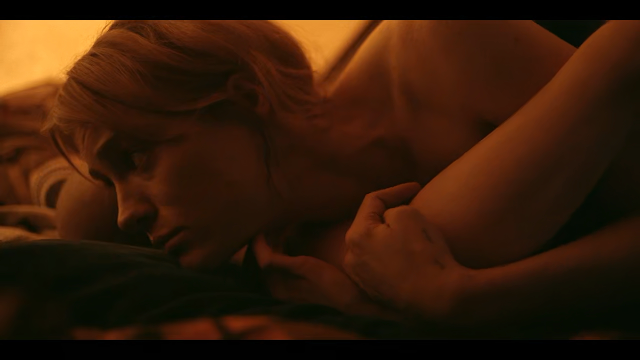
While she performs as Hamlet, Kirsten has flashbacks to the first weeks with Jeevan and Frank, to finding out about her parents’ death from impersonal text messages, the grief of losing parents (that is now tangled up with the grief of losing her replacement father, Jeevan, and her brother of sorts, Frank). We realise that she is such a good actress because she channels all of those feelings into her performance. Afterwards, while Alex sings a dirge, a lament for the death, not just for the stranger they met earlier that day but for everyone they have all lost, Kirsten approaches that stranger, and points out all the mistakes in his story – and then she stabs him after refusing him entrance into her community, after he threatens that her friends will begin disappearing if she does not admit him. It’s a reminder that Kirsten is not just the lead actress, but also the protector of the Symphony, the person who has knives sewn into her costumes, who bears tattoos of those she killed before. The stranger threatens her – the first hints of a cult, of an ideology. “To the monsters, we’re the monsters.”, he says again, and Kirsten knows those words.
Random notes:
How great is it to see Lori Petty again, and in such a great role.
The title of the episode is fitting and from Hamlet - about perceiving reality and tell things apart - which is what Kirsten does when she sees through the stranger's story, and realises he is a threat to her community.
After their first performance of Hamlet, Sarah is approached by an emissary of the Museum of Civilization (played by the great Enrico Colantoni). He invites them to their settlement which they have kept secret, but Sarah turns him down rather rudely, saying that they never leave the “wheel”.
The conductor tells Kirsten that the children in the company are the only good actors because everyone else is too traumatised – which is an interesting statement, considering that arguably, Kirsten is such a good actress because she is traumatised.
Oh Dan! His fifth audition for the company is the speech from Independence Day, and he finally gets the gig. Let’s hope nothing bad happens to Dan.
In a great moment, Kirsten explains ridesharing apps to Alex, who must be too young to remember the world before, personifying the generational rift that the plague would have created.
A blink and you miss it appearance by Ess Hödlmoser (in Kirsten’s tent!), who has been great in this year’s season of Motherland: Fort Salem.
We don’t know much about the cult yet, but the stranger’s comments about “Day Zero pain” hint at what the core of it is.
Subscribe to:
Posts (Atom)