Friday, 31 December 2021

Reading List: December.

Non-Fiction: 

David Graeber and David Wengrow: The Dawn of Everything. A New History of Humanity.

Amia Srinivasan: The Right to Sex.
Laura Lee: A History of Scars. 
Qian Julie Wang: Beautiful Country. 
Patrick Radden Keefe: Empire of Pain.

Fiction: 

M.J. Kuhn: Among Thieves. 
James S. A. Corey: Leviathan Falls.
Karen McManus: You'll Be The Death of Me.
Karen McManus: Two Can Keep a Secret.
Tade Thompson: Far From the Light of Heaven. 
Hannah Kent: Devotion.
Alison Rumfitt: Tell Me I'm Worthless.
Lauren Groff: Matrix.
Layne Fargo: They Never Learn.
Tess Sharpe: The Girls I've Been.
Tess Sharpe: Far From You.
Tess Sharpe: Barbed Wire Heart. 
Nekesa Afia: Dead Dead Girls. 
Alison Ames: To Break a Covenant.
Catherynne M. Valente: Comfort Me with Apples.
Katie Kitamura: Intimacies.
Isabel Sterling: The Coldest Touch. 
Tochi Onyebuchi: Riot Baby. 
Alex White: Revenant.
Tilly Lawless: Nothing But My Body.
Emily Layden: All Girls.

Films: 

Die Frau mit einem Schuh (2014, Michael Glawogger).
Bloodthirsty (2020, Amelia Moses).
The Retreat (2021, Pat Mills).
The Strings (2020, Ryan Glover).
The Novice (2021, Lauren Hadaway).
Nitram (2021, Justin Kurzel).
The Nowhere Inn (2020, Bill Benz).
The Matrix Resurrections (2021, Lana Wachowski).

Shows: 

Arcane, Season One.
One of Us is Lying, Season One.
Departure, Season Two.
The Sex Lives of College Girls, Season One.
Hellbound, Season One.
This Way Up, Season One, Two.
Control/Kontrola, Season One.
Landscapers, Season One.
Why Women Kill, Season One.
The Girl Before, Season One. 
Crime, Season One.
When the Streetlights Go Out.

Shows of the Year

 Best new show:

Yellowjackets

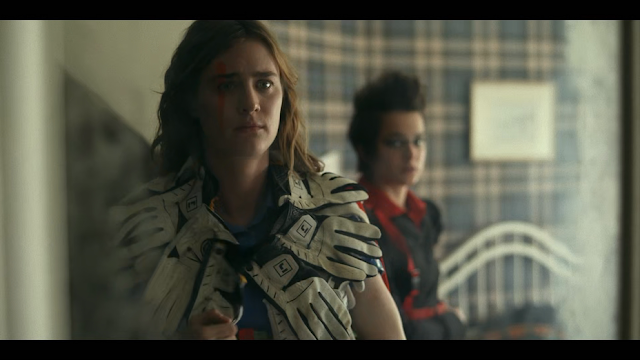
A successful high school soccer team gets stranded in the wilderness after a plane crash - and the story of survival is told in conjunction with the unravelling of a mystery 25 years later. This cast is astounding - not just the older counterparts (would I have ever thought to see Christina Ricci, Juliette Lewis and Melanie Lynskey share a screen?), but the young girls discovering what it takes to survive, and veering off into something dangerous, are captivating. There are obvious references here, but all I could think of was last year's The Wilds (which was gorgeous too), and I think the two exist in conversation with each other. 

We Are Lady Parts

Saira, Bisma and Ayesha (and Momtaz, their band manager) are a three-piece Muslim punk band (inspired by riot grrrl with a repertoire that includes "Voldemort Under My Headscarf" and "Honour kill my sister") that is seeking in audience. Amina is a very talented guitarist (more into folk though) and PhD student who is seeking a husband, but accidentally, instead, finds herself as their lead guitarist. This show is EVERYTHING. It's about mutual support, insecurity, anxiety and grief, and it's about the shared joy of creating something together in spite of seemingly insurmountable obstacles. I wish this had 10 seasons. 

Only Murders in the Building

Comfort food in 2021 - Steve Martin, Martin Short and a very good Selena Gomez (what a find!) investigate a murder in their New York apartment building, trying to use a podcast to make money and gain fame. It's about the twists of the investigation, the relationship (and secrets) of the three self-made detectives, and at its best, it's a perfect show (in one episode, we follow a hearing impaired man who turns out to be a suspect, and until the last minute, no words are spoken, somehow without feeling too gimmicky). 


Arcane

Not sure how to sell this except to say that this is so unexpectedly queer, and so very unexpectedly and devastatingly sad, and very beautiful, even though it is important to remember what the production conditions were. 


Hacks

A whole show! About the wonders of artistic collaboration! Funny, crude, but at its best, emotionally honest about love and mentorship, but also betrayal and facing up to the past. The two leads, Jean Smart (who is also great in Mare of Easttown) and Hannah Einbinder, are outstanding. 

WandaVision

I have an ambiguous relationship with the Marvel film universe, where I feel tender feelings for certain aspects of it, but most of them have been severely disappointed over the years. For one, if you care 100% more about Peggy Carter and Captain America than about the vain tin man, it's hard to feel catered to. WandaVision is ambitious - an experiment, akin to the unconnected shows that Marvel put out alongside its films (the best among them probably the sadly short-lived Cloak and Dagger). It travels the time eras of classic American sitcom while slowly revealing the dark undercurrent beneath it - that like populaces in general, the harmlessness of the shows hides a darker intention beneath it. Elizabeth Olsen is marvellous, and so is Teyonah Parris as Maria Rambeau's daughter Monica (who gets her powers here) - but the break-out star is Kathryn Hahn, predictably great in every era. 

Foundation

When this came out initially I read some reviews that made me think this wouldn't be for me: I read some Arthur C. Clarke as a child and that's as far as I ever got with "hard science fiction", and since then, I've only really been into The Expanse's approach to it, which is basically class struggle in space. But then I began watching, and could not stop. Foundation spans decades, its vision, centuries, and yet the interplay between societal change (as predicted by mathematical models that honestly, to me, sound more like statistics applied to political science?) and the inherent unpredictability of messy humans worked. The characters are compelling, especially Gaal and Salvor, and whatever Lee Pace does with the different iterations of Brother Day is something else. The cloned empire (it's empire, not emperor, three people who are one person are empire) reminds me a little bit of Arkady Martine's A Memory Called Empire (I guess it's what Six Direction is trying to achieve, via Mahit's technology?). 

Best one-season shows: 

Exterminate All the Brutes

Raoul Peck's furious documentary isn't just about the violence of colonialism, it investigates how Europe and the United States construct themselves from colonialism, white supremacy and racism, and leave devastation in their wake. 


The Investigation

Like Unbelievable, this should be the benchmark for how shows about investigations of violent crimes against women should be told. We never see any of the violence, but the horror of what happened is palpable in every scene. 

Mare of Easttown

A difficult-to-miss police show in which Kate Winslet convincingly plays a rugged small-town American cop struggling to solve the disappearance of a young woman. Kate Winslet is outstanding, even though the show never hits quite as hard as the first season of Broadchurch (which feels like the obvious reference here) does. 


The Newsreader

New Gold Mountain

Dopesick

American Rust

Squid Game


Best shows:

Feel Good

Feel Good's second season is a complete surprise - both in terms of existing (I didn't realise it was going to have a second season!) and in terms of how it becomes a captivating and sad story about Mae's teenage years, and the complex trauma she is facing after being abused by someone she thought a friend. At the margins, it, like Hacks, investigates how prevalent sexism still is in stand-up, but the moments that hit the hardest are when Mae deals with what is inside her own head, and how it affects the people she loves. 


For All Mankind

This was a tense season that focused more on the politics of a re-written space race, in which the USSR and the US vie for moon resources and come close to a non-cold war after the Reagan regime decides to send armed troops, and things predictably get out of control in a horrifying way. I'd like to believe that For All Mankind has its own alternative history version of The Americans written into its fabrics, and some of the events at the end of the season hint that this might be the case. Otherwise, there's the outstanding Ellen Waverly, the loneliest woman on the moon, who returns to make a choice between love and happiness and her dream of landing on Mars. One of my favourite things about this show is how it subtly investigates how the progress in the space race may impact technology, and bring forward things earlier, but maybe we also got some traces here of the same creator who mirrored Bush's "war on terror" via Laura Roslin and Admiral Adama (the show's version of Reagan is certainly a trip). Vale Astronauts Stevens.

Motherland Fort Salem

The politics of the this show are still all over the place, but for something that often feels like it was written partly by LSD (or, fittingly, mushrooms), Motherland continues its great character work into a second season, a second season that deepens the feeling that there is a whole lot of grey here and not a lot of black and white. 

Rojst

This Polish crime show set in a small city began in the 1980s, during Soviet rule, and then followed up with a second season set in the 1990s, revealing the dark second world war secrets that still reverberate through the town. It's a triumph of Netflix' new strategy of creating shows in countries that would normally not reach a wider audience. Moody, dark, but then lightened by unexpected humour. Plus, the second season features an investigator that will be hard to forget, and to measure other police detectives against. 

Dickinson

This second season of Dickinson is all about the cost of fame, and the question of its value - who does Emily write for? Her beloved Sue crumbles under the pressure of her sole readership, but the main she defers these beautiful poems to is not reliable, and has interests of his own. Emily is haunted by fame, or by being forgotten by history (since she does not have the luxury of knowing who she will be, centuries later). Meanwhile, the world she lives in is teetering towards a great war, something that she barely engages in. Surprisingly, one of the most heartfelt storylines this season is about her brother Austin's attempts to find meaning in a loveless marriage, with a partner who does not trust him to know her feelings, or to regard his. Dickinson is just always, somehow, a little more than what you'd expect. 

Line of Duty

Line of Duty has consistently been about the impossibility of a corrupt organisation investigating itself. It has shown, over six seasons now, that the moral and ethical aspirations of its three main characters - Steve, Kate and Hastings - fail in the face of a deeply undermined and incredibly powerful police force with a long history of connections to organised crime. The world Line of Duty shows is one where everyone, regardless of who they are, is susceptible to be blackmailed into immorality. After the genius seasonal appearances of Tandiwe Newton and Stephen Graham, the sixth season has Kelly MacDonald as a police detective in the crosshairs of AC-12, and she gives an understated performance that escalates over time (also, we are constantly on the cusp of something with her attempts to connect with Kate). 

Batwoman

Also: 

Kontrol/Kontrola TRUST ME ON THIS. 

Life is Strange: True Colors. 

Sophie Thatcher this year, not just in Yellowjackets, but also in When the Streetlights Go On, a ten-parter consisting of less than 10 minute long episodes about a small-town murder set in 1995 (along with Cruel Summer, a lot of things appear to cycle back to the 90s this year, and thrive on the pop culture). The thing about Yellowjackets isn't just that its young main cast so perfectly mirrors the older counterparts, its that it is conceivable, from their sheer amount of talent, that they could eventually become equally as iconic as Juliette Lewis (and Christina Ricci, and Melanie Lynskey - and Jasmine Savoy Brown is just as great as a young version of Tawny Cypress' Taissa). Sophie Thatcher is a stand-out in both, like maybe she's already there. 

Jordan Hull's performance in the disaster that was the second season of The L Word: Generation Q.

One of Us is Lying: This is everything I wanted from what it proclaimed to be. Great, self-contained eight episodes of sheer entertainment, and a breakthrough performance from Jessica McLeod as Janae. What if Pretty Little Liars but without the long, sad, slow descent into badness? Although wasting Ali Liebert on a bit part is a bit of a crime, but forgiven for the rest of it. 

Olivia Colman in Landscapers, which is an artistic masterpiece in and of itself, experimental and a new take on an increasingly more popular (and tired) genre - her performance is utterly emotionally devastating, Naomi's mum's done it again. 

Films of the Year

His House (2020, Remi Weekes)
Minari (2020, Lee Isaac Chung)
Passing (2021, Rebecca Hall)
Nomadland (2020, Chloé Zhao)
Unpregnant (2021, Rachel Lee Goldenberg)
Promising Young Women (2020, Emerald Fennell)
Fear Street Part 1: 1994 (2021, Leigh Janiak)
Hiacynt (2021, Piotr Domalewski)
Bit (2019, Brad Michael Elmore)
The Strings (2020, Ryan Glover)

Bonus shout-outs: 

The Novice (2021, Lauren Hadaway)
I Care a Lot (2020, J Blakeson)
One Night in Miami (2020, Regina King)
Bloodthirsty (2020, Amelia Moses)
Miss Juneteenth (2019, Channing Godfrey Peoples)

2009 | 2010 | 2011 | 2012 | 2013 2014 | 2015 | 2016 | 2017 | 2018 | 2019 | 2020

Music of the Year

Albums:

Goat Girl: On All Fours.
Dry Cleaning: New Long Leg.
Moaning Lisa: Something Like This But Not This.
Kučka: Wrestling.
Hana Vu: Nicole Kidman / Anne Hathaway and Public Storage
Little Simz: Sometimes I Might Be Introvert.
Snail Mail: Valentine.
The Mountain Goats: Dark in Here.
Courtney Barnett: Things Take Time, Take Time.

Songs:

Squarepusher: Tundra (on Feed Me Weird Things)

Rhye: Black Rain (on Home)

The Notwist feat. Saya: Ship (on Vertigo Days)

Julien Baker: Relative Fiction (on Little Oblivions)

Burial: Dark Gethsemane (on Shock Power of Love EP)

Sleater-Kinney: Method (on Path of Wellness)

Japanese Breakfast: Glider (on Sable OST)

Grouper: Unclean Mind (on Shade)

 2009 | 2010 | 2011 | 2012 | 2013 | 2014 | 2015 | 2016 | 2017 | 2018  | 2019

Station Eleven – Would you die for a stranger?

Station Eleven: 1x05 The Severn City Airport. 

Elizabeth: Well played, Marc Antony. You’re a star. 

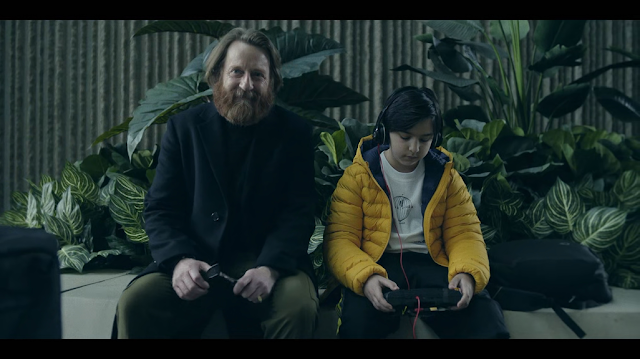
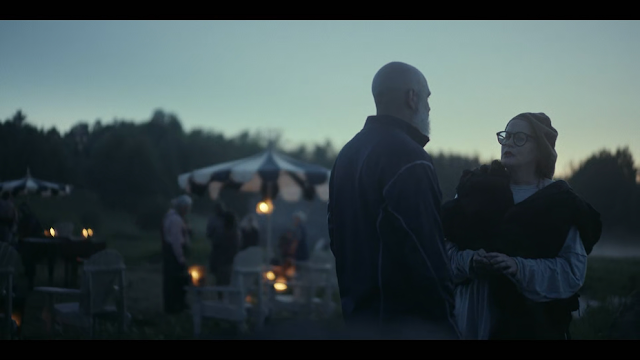
In many ways, The Severn City Airport is constructed like a very subtle horror film. It elegantly establishes an atmosphere that is eerie and unsettling, that builds an expectation of some kind of explosion of violence, which is never quite resolved at the end. There are two sources of that unsettling feeling: The situation itself, the absurdity and weirdness of a small, out-of-the-way airport during the apocalypse, and the character of Arthur Leander’s son, Tyler, who is stuck there with his mother Elizabeth and Arthur’s friend Clark, who hasn’t been close to either of them. 

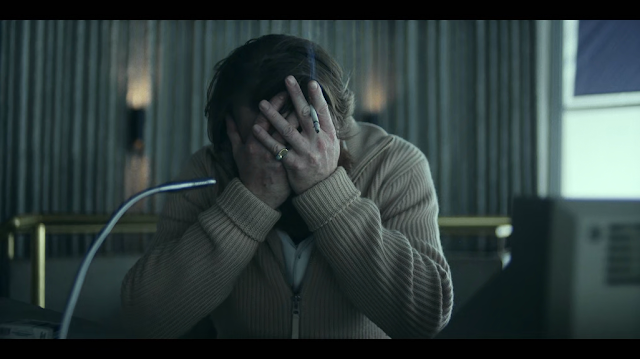
Tyler is a strange child, and because this episode functions like a horror film, the strange child causes a sense of disconcertment, of unease, eventually, of fear. In the beginning it seems as if he is just the product of a messy celebrity divorce, of a man who never bothered or found the energy to really look after the people he left behind. Then, after a while, it becomes obvious that Tyler has something more profound going on, that will feed off the situation and the ideology of Station Eleven to fully emerge as – spoilers – the man that Kirsten immediately knew was fundamentally wrong when she first met him. 

But back to the beginning: on the day that the apocalypse reaches the United States, Clark (David Wilmot) is boarding a plane to Chicago to sort out his friend’s will. Throughout the episode, it is obvious how ambivalent his relationship with Arthur was, how much he loved him in spite of their rivalry, in spite of the fact that Clark is no longer an actor (he’s a consultant now – the furthest from art possible), and his sense that Arthur was never very good to the people he purported to love, while being easily loved by everyone he ever met. On the plane, he spots Elizabeth (Caitlin FitzGerald) and Tyler (Julian Obradors) in first class, but when he tries to talk to them, the rift between them is obvious, the fact that Elizabeth blames him for keeping Arthur’s indiscretions secret from her. Arthur has done to her what he did with her to Miranda – betrayed her – and Tyler, a row behind her, has disappeared into his headphones and handheld device, which Elizabeth confuses for not being aware of his surroundings. It later becomes obvious how very aware Tyler is, that he is, in fact, a few steps ahead of everyone when it comes to assessing the situation they are in. 

That situation, after a few hours, turns out to be being stuck in an airport during the apocalypse: safe, because none of the passengers are infected, but also trapped, because the outside world is no longer a place that is survivable. Everyone batters down, sleeping rough – Clark begins drinking, and doesn’t stop for a good few days. While Elizabeth refuses to accept the reality of the situation, which is that her celebrity no longer buys her special treatment, new power dynamics emerge, including a janitor pretending to be a Homeland security agent taking off with many of the women with the only remaining pilot, a situation that may look like a catastrophe from the outside, but that is turned into an opportunity by Clark. He reveals the man to be an impostor, and his decision to leave as a blessing, as this means more resources for the remaining people, and a strengthened sense of togetherness and community – and he goes further than that, proposing that he, Elizabeth, Miles (a former security officer) and Tyler form a triumvirate (but with four) of leadership for the remaining people in this place of plenty that provides food, shelter and safety. 

Tyler immediately questions their need for leadership, and the rift that will determine the future of this whole world emerges. Clark wants to get back to past greatness, wants to steer these remains of humanity to a “repopulation” of Earth. Hence, more than 100 days later, the emergence of the Museum of Civilization (because that’s what this little airport will turn into): as a reminder of humanity’s past greatness, achievements that it should return to. Before the end of the Internet, Clark has Tyler download Wikipedia, to preserve both useful knowledge and the great artistic achievements (Shakespeare, of course). But we already know where this is headed: even before Tyler is given his own copy of Station Eleven by his mother, he is voicing that maybe humanity shouldn’t repopulate. Looking at the last article he downloaded from Wikipedia (it’s capitalism, of course), he suggests just deleting it, but his mother says that humanity will just invent it again – except maybe, with the kind of radical and absolute change that Tyler comes to desire, humanity will have no connection to the past anymore. 

It’s a coincidence that leads to a sharpening in Tyler’s ideology. An airplane that landed after the airport locked down, an airplane that everyone inside assumed was filled with corpses (early on, Clark is asked if he would die for a stranger, and he responds that he probably wouldn’t – the downside of that is watching all those people die in the far distance, offering them no help), discards one single passenger. Tyler knows that this means that the man is immune from the disease, and he leads him inside, where Miles shoots him because everybody panics about transmission. The people demand that Tyler be shot as well, or at least sent to quarantine, where he and Elizabeth end up for a month. In that month, Tyler reads Station Eleven, and becomes unreachable to his mother. In that month, he becomes something that scares Clark enough that he, thinking himself unobserved, should be sent out into the wilderness. 

Clark: He’s like you in a way. Bold, indifferent to authority, singular. But he’s a destroyer. 

Maybe Tyler overhears, maybe he doesn’t, but he is observant enough that he knows he has to leave. He sets the plague plane on fire, making everyone believes he’s on it, and while Elizabeth wails that final loss, after months of thinking that maybe this is a chance to reconnect while realising it is only making the distance between Tyler and her more obvious, Tyler takes off into the dark. 20 years later, he will tell Kirsten that she will lose Alex first, and then all of her friends, one by one, until nothing is left. 

Random notes: 

It is funny to watch this and see the janitor pull a Roxanne (with less dire consequences than on Y: The Last Man, and with greater comedic effect). 

The scene in which Elizabeth gives Tyler Miranda’s Station Eleven is heartbreaking: knowing the destruction Arthur has caused, she lies about having burned letters from him out of selfishness, but she knows her son recognises lies, she knows that Tyler knows that his dad never bothered to write a single letter to him.  

Another heart-wrenching moment: when Clark finally has reception again at the airport after a few days and listens to messages from his dying partner. He allows himself to grieve for a while, and then something new begins with Miles. 

Favourite Books I've Read This Year

Non-Fiction: 

Talia Lavin: Culture Warlords: My Journey into the Dark Web of White Supremacy.
Aileen Moreton-Robinson: Talkin' up to the white woman: Indigenous women and feminism in Australia.
David Graeber and David Wengrow: The Dawn of Everything. A New History of Humanity.
Amia Srinivasan: The Right to Sex.
Beth Macy: Dopesick.

Fiction: 

Charlotte McConaghy: Once There Were Wolves.
Ellie Eaton: The Divines.
Emily Layden: All Girls.
Chris Harding Thornton: Pickard County Atlas.
Jung Yun: O Beautiful.
Lauren Groff: Matrix.
Sarah Langan: Good Neighbors.
Silvia Moreno-Garcia: Mexican Gothic.
Zen Cho: Black Water Sister.
Mira Grant: Into the Drowning Deep.
Alison Rumfitt: Tell Me I'm Worthless.
Patricia Lockwood: No One Is Talking About This.
Melissa Broder: Milk Fed.
Martha Wells: Murderbot Diaries. 
Stina Leicht: Persephone Station.
Becky Chambers: The Galaxy, and the Ground Within.
Becky Chambers: A Psalm for the Wild Built.
Arkady Martine: A Memory Called Empire / A Desolation Called Peace.
P. Djèlí Clark: A Master of Djinn. 
Tasha Suri: The Jasmine Throne. 
C.L. Clark: The Unbroken.
Shelley Parker-Chan: She Who Became the Sun.
Ryka Aoki: Light From Uncommon Stars.
Zoe Hana Mikuta: Gearbreakers.
Micaiah Johnson: The Space Between Worlds.
Rivers Solomon: An Unkindness of Ghosts. 
Rivers Solomon: Sorrowland.
Sara Flannery Murphy: Girl One.
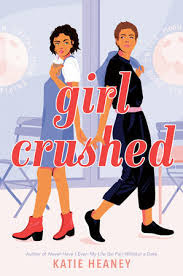
Katie Heaney: Girl Crushed.
Morgan Rogers: Honey Girl.
Casey McQuiston: One Last Stop.
Britta Lundin: Like Other Girls.

Becky Chambers' The Galaxy, and the Ground Within is a triumph. It's maybe my favourite novel of 2021, after her previous To Be Taught, If Fortunate, could make the same claim in 2020. It's a novel that feels prescient, a gentle and careful story about a cast of non-human characters that find themselves stranded, temporarily, guests and hosts on a planet, finding meaning in each other, and consolation. It's the kind of novel that feels essential after this insane year, one that lights a way towards an idea of a better, more connected life, that embraces differences without pretending that they don't exist and still puts all the focus on empathy and caring. It's everything science fiction can be when it strives. 

Martha Wells' self-named Murderbot is an outstandingly compelling protagonist in her several novellas and Network Effect, the first full-length novel. It hates emotions and yet has so many of them. It has broken out of a slavery and torture and is loath to trust humans, and yet finds a human family that it has many of those emotions about. The novels are about found family, and what it takes to gain trust in relationships, but Wells also builds a complex universe in which capitalism in space is still the greatest evil (it also fits in perfectly with Elon Musk's brand-new idea of indentures servitude to make it to new galactic shores). In Stina Leicht's Persephone Station, the scarred veterans of an old conflict are reunited in a mission to support the original inhabitants of a planet that is about to be colonised by a greedy corporation, while an artificial intelligence in a human body discovers what it means to interact with humans and to navigate the politics of colonialism and resistance. Also, almost everyone is queer.

In Arkady Martine's Teixcalaan series, now comprising of the novels A Memory Called Empire and A Desolation Called Peace, the titular empire considers itself humanity - the word for world is the city, an imperial language that makes it impossible to event think about Teixcalaan in any other terms. One of Martine's protagonists is Mahit Dzmare, from a station outside of empire, a station eager to maintain its own independence, who comes to the city she has always dreamed of and loved as an ambassador. Not unlike Baru, if with less direct violence and force, Mahit has spent her entire education on learning about the empire, but once arrived, she realises that regardless of how well she speaks the language of empire, she will never truly be able to achieve the fluency of those born into it - especially in a world that expresses everything in verse, and maintains its imperial memory through poems (Ortus Nigenand would be so happy, or maybe, considering the amount of competition, stressed). The two novels also navigate what it may mean to conserve memory through shared consciousness, as Mahit arrives in the imperial cities with the incomplete memories of her predecessor making themselves heard in her brain (again, not unlike Baru and Harrow, but maybe functionally more like a Trill, including the struggles of an incomplete integration). With a Teixcalaani attache, Mahit investigates the death of her predecessor, and stumbles across something that will change the future of both the empire and her station. The second novel contemplates what it would mean to make meaning not just out of small differences, but out of massive ones, and to find common ground without a shared language, purely through the power of the newly invented field of exolinguistics.  

This year also brings together three books that feel like they communicate with each other: Shelley Parker-Chan's She Who Became the Sun, Tasha Suri's The Jasmine Throne, and C.L. Clark's The Unbroken. All three are stories of empire, told from different perspectives - The Jasmine Throne and The Unbroken split between the ruler and an the rebellious resistance, She Who Became the Sun a breathtaking re-imagining of a historical figure who makes an unlikely rise to the centre of power. All three are unforgiving in showing the violence of rule, but their protagonists are what makes them outstanding.

The generation ship in An Unkindness of Ghosts has been travelling for 300 years, and the society onboard has dissolved into extreme class-stratification, driven by racism, excused by religious dogma. Rivers Solomon compelling hero Aster discovers her mothers research that could change the journey of the ship and topple the cruel regime that hurts the people she cares about. 

Solomon's new novel, Sorrowland, follows Vern, who escapes a cult to raise her twins by herself in the woods while her body transforms. Vern discovers that the cult she escaped - a black separatists commune that has created a community to escape racism, but have been undermined early on by the FBI, and used for medical research - has many dark secrets, as her body transforms and she finds a new family that helps her return and defeat the evil that lurks there. It's a novel about control, misogyny and transformation, with an absolutely riveting main character. 

In Ryka Aoki's Light From Uncommon Stars, a famous violinist had made a deal with the devil to deliver 7 talented students in exchange for fame and eternal life - but when she meets a young trans woman with incredible untapped talent, her willingness to sacrifice her wanes over time. She also befriends the owner of a local donut shop whose family is way more than they appear to be. This is a fantastic story that, when it cares deeply about music, reminded me weirdly of how Richard Powers writes about it in the great The Time of Our Singing and The Gold Bug Variations (Aoki writes just as poetically about food), mixed with the old literary concept of a deal with the devil and a background story about intergalactic refugees making a new home among non-galactic immigrants. A stunning novel written by a poet. 

It fits in with Sara Flannery Murphy's Girl One, which is about a group of women that teamed up with a non-sanctioned scientist to realise the possibility of parthenogenesis, but as Josie, one of the girls born without a father, begins investigating the disappearance of her mother, she realises that the contribution of the scientist was mainly patriarchy and greed, that the women themselves did the work but were never regonised for it, and have suffered terribly to prop up the ego of the great man. It's a thriller - a road movie, a romance, and a superhero story all in one. 


Ellie Eaton's The Divines is a portrait of an elitist, if not academically so, all-female boarding school and a catastrophe that happened then, that is slowly revealed as the narrator recounts her schooldays. Struggling with returning memories, Jo in adulthood discovers that her memories aren't as reliable as she thought, and that, like many teenagers, she failed to see herself from the perspective of others at the time. This does not veer into a wild, fantasy place of body horror like last year's Catherine House or the magnificent Wilder Girls by Rory Power, but it still maps the inherent horrors of teenage girls, but what they do to each other and what the world does to them. 
In Sarah Langan's Good Neighbors, teenage girls are the centre as well. In a suburban crescent in Long Island (which has been shown to be an easy target for evil preying on the intolerant and insecure in N.K. Jemisin's The City We Became), a hysterical panic breaks out among neighbours during an unprecedent heatwave, in which a literal abyss (a sinkhole) appears in their midst. The quaint neighbourhood begins showing its teeth, turning all of its terrible attention to what they perceive to be interlopers: The Wildes, a family that just does not fit in in term of class (and, unsaid here, race). Langan shows how the subtle horrors of suburbia (quashed ambitions, endless wine bottles in secret basement cupboards, marriages that should have ended decades ago) can turn into the very real horror of a bloodthirsty mob, and how the kids of the families become either complicit or very deliberately contrarian. The best surprise here is the Wildes - each of their individual voices, attempting to reason with the unreasonable and comprehend what is incomprehensible. 

I have spent a lot of time this year catching up with television I'd previously missed out on, like The Sinner and Hightown, and in addition to some newer shows - the adaptation of Dopesick (which adds fictional characters to the re-telling of Purdue's obsession with making Oxycontin into what it became), American Rust, even Midnight Mass to an extent, they all add up to a quilt of American small-town life. They are also, with the exception of the last, about crime and/or drugs and how they affect a limited cast of characters that represent a community. Right into this frame of mind, I read two novels - one, Pickard County Atlas, set in the 1970s, the other, O Beautiful, contemporary. They shouldn't match up in my mind and yet they do, because both would make television shows that fit right in with these other ones I'm watching - the first one follows different characters in a dying town as they are set on a collision course with each other, all of them burdened by past trauma. O Beautiful follows a journalist back to her home state of North Dakota to investigate how shale fracking has impacted a place that used to be small, and is now bursting at the seams with people looking for secure employment and a future in a town that no longer welcomes outsiders with open arms. 

Silvia Moreno-Garcia's Mexican Gothic is a visually, imaginative tour de force through a haunted mansion and through the horrors of white colonialism. Morena-Garica finds a pitch-perfect metaphor: a fungus that lives underneath and in the walls of a Gothic mansion that an English mining dynasty has built in the forest far from urban centres, that grants a skewed and incestual eternal life to the patriarch, at the cost of the local workers and non-white women. The protagonist attempts to rescue her cousin from her marriage into this family, but she soon experiences the effects of this monstrous literal colonialism. 
In Mira Grant's Into the Drowning Deep, a vast cast of characters sets out to figure out if sirens exist, being fully aware that if they do, they pose a severe danger to every single crew member - and what they find is even more horrible, but also fascinating, than they expected. For some reason, this novel drew me in the same way that Caitlin Starling's The Luminous Dead did, in spite of the fact that they couldn't be more different in terms of setting - Starling's novel has two characters, Grant's has countless of varying levels of sympatheticness. Both are great, page-turning horror.

Patricia Lockwood's No One is Talking About This is very difficult to describe. It starts off as a stream-of-consciousness novel about stream-of-consciousness novels but during times of (unnamed) twitter, written by Miette's mother (so famous that one of her tweets appears in Tamsyn Muir's Harrow the Ninth, having survived millennia in the popcultural mind of its God). It then becomes something completely different in the second part, when the narrator's life is cut into two parts by a family tragedy. What does it mean to grief but also to still have trivial social network life happen in the background? What does it mean to have a before/after event in your life but still exist in the very same world that was there before? I cried throughout the second half of No One Is Talking About This
In Milk Fed, Melissa Broder writes about a young woman who has subsumed her entire life into an eating disorder, inherited from her mother, who begins to discover pleasure once she takes her psychologist's advice and breaks off contact with that overbearing mother. This is sometimes funny, sometimes sad, but also very aptly portrays what it means to lead a joylessly regimented life only to find a whole world beyond it. 

Lauren Groff's Matrix! Beautiful novel about a headstrong young women sent to an impoverished abbey by Eleanor of Aquitaine, where she goes on to reform and build and write poetry that is mirrored in the poetry of the book itself. This is an alternative biography of a historical figure that is known for her major work and otherwise lost to history, which takes up a central part of the novel, but beyond that, it is one of the liveliest novel I've ever read. 


Honey Girl by Morgan Rogers begins like a comedy of errors - 28-year-old Grace Porter wakes up in Las Vegas, slowly coming to the realisation that she has, uncharacteristically, gotten married to a stranger, a departure for the otherwise highly controlled and driven young woman who has a clear path in life she fears to deviate from. What follows is a surprise though - this is a love story, but no so much that of Grace falling in love with her newly minted wife, but about Grace, through therapy, discovering how to approach the wounds of her childhood and youth and how to learn to live in a way that doesn't lead to pain and suffering, as she has for the past 28 years of her life. Honey Girl is about therapy and self-realisation, and it's a beautiful, moving book with a great cast of characters. 
I didn't even start to read Young Adult Fiction until I was well out of that age group, but now that I do, I wish I had had access to these books earlier, they would have made me feel less alone and more connected during my school days. Katie Heaney's Girl Crushed is one of the best I've read: it's about the end of a relationship, and a main character who is desperate to prove that she is over that first big love, but finds that sometimes the lines aren't as clear, that sometimes going backwards is just as good as going forwards if it is for the right reasons. The novel also features two lesbian bookstore owners who add cultural references more close to my heart (do the kids still listen to Le Tigre and the best break-up song of all time, Sleater-Kinney's One More Hour? I hope so.).

Vox: The death of the job, August 24, 2021.

Tuesday, 28 December 2021

Station Eleven – But I’m safe now.

Station Eleven: 1x04 Rosencrantz and Guildenstern Aren’t Dead.


One way to think about the physical graphic novel of Station Eleven is the meaning it has attained after the apocalypse. There are perhaps still ways to write single-issue books – by hand, as Gil does in this episode in a beautiful act of mirroring – but the professionally bound book that young Kirsten carries around with her, that is solid enough to survive her travels (protected further by foil) is entirely an object of the past. We finally hear the full story in this episode, after Kirsten derails the journey of the Traveling Symphony only to check that her book is still where she left it. 

Doctor Eleven drifts in space and finds refuge on a severely damaged space station haunted by its survivor, the captain, who appears to be engaged in an ideological battle about the future with the other survivors, the Children of the Undersea. They disagree over the role of the past, over what they should do in the future. Doctor Eleven remains impartial. 

It’s relevant here because when she talks to Alex about David, the Prophet, Kirsten realises that the ideology is the same, that David has built his cult on the idea that there is a fundamental rift between Pre- and Post-Pans, those who remember and mourn the world before and those who were born too late to truly know it, and can’t quite comprehend why the others are so bound up in their grief and longing for the world that was lost. Once the Symphony reaches Pingtree (an old country club, surrounded by an overgrown golf course), there is further proof that the Prophet has a horror-movie like MO – he enters communities and steals their children, which is what he tried with Alex, what he would have succeeded in if Kirsten hadn’t stabbed him. 

A lot of what this episode does is excavate relationships, and the emotional core is the troubled one between Sarah, the Conductor, and Gil, the former Director who used to be her partner but left her for another woman, and now resides in Pingtree. The Symphony used to have a tradition where it split up, the actors going to Pingtree, the musicians travelling on to the next town, but once Gil betrayed her, Sarah ended the tradition, and the Symphony hasn’t been to Pingtree since. After her conversation with Alex, Kirsten needs proof that Station Eleven is still in the town, because the Prophet has become a mystery: how can a man repeat lines from a book that Kirsten thought only she (and Frank and Jeevan) had ever read, a book so intimate to her that it now feels like it is hers, entirely? So she tricks Sarah into going to Pingtree (by telling a lie about Gil’s new partner having died). When they arrive in Pingtree, they find that the community has reinstalled a minefield after the Prophet stole the two children with the same words that he used on Alex: lines about how they are the first generation to live without trauma, about how the survivors are the only liars left. 

We haven’t seen much of Alex before her conversation with David – she is the youngest in the group, the only Post-Pan, who listens to stories about the past as if they were fairy tales – they are interesting, but have no bearing on her life. David’s words resonate with her because she travels with a group of people who have basically made a whole life of the past, adapting Shakespeare plays traditionally, bringing a tradition from the past to each town they visit. Here we see Alex begin to express frustration over it, which is only temporarily vented when Sarah (to impress Gil, who hates Hamlet) lies and tells Pingtree that the Symphony has modernised Hamlet, has brought it to the present times. We know it’s a lie because we’ve seen Kirsten play a traditional Hamlet, and now the troupe has to write and rehearse an entirely new play, in which Kirsten becomes a side character and Alex’ Ophelia turns into the main character who rages against being robbed of her agency, and gets to walk away alive in the end, triumphant. Kirsten is frustrated with that turn of events, in part because she felt so deeply for Hamlet, in part because she is used to being the main event, not the supporting cast. 

So we have a conflict in the present between Alex and Kirsten about whether the words of the Prophet hold any truth, but beyond that, about how much Kirsten’s protectiveness of Alex actually confines her in a life she doesn’t want to lead. It escalates when Kirsten triumphantly tells Alex that the only reason why she didn’t end up going with David is because she stabbed him, and Alex is shocked by that admission rather than thankful (Kirsten says “you’re welcome”, expecting a thank you that will never come). Soon after, she sees Alex riding off on one of the horses through the minefield, towards the children that have lurked on the periphery of vision the entire episode, after calling the Symphony a “terrified carnival of trauma”. 

The conflict in the past is between young Kirsten and Jeevan, and it happens to support what everyone tells Kirsten in this episode: that the words of the Prophet match her own ideology, that she too has these radical ideas about the present and the past, maybe because she was shaped by the same piece of fiction as he was. After all, Kirsten is barely Pre-Pan – she was eight when it happened, and it turned her into something new quickly, something that Jeevan, here at the cabin by the lake, already finds pretty scary. They’ve killed a pack of wolves (which gives Kirsten opportunity to explain how they are the monsters that monsters fear to Jeevan), they’re subsiding in this endless winter, but Jeevan is beginning to express his resentment over a life he doesn’t feel he’s chosen, a life he stumbled into when he agreed to walk Kirsten home. He’s also sad over the loss of his brother that appears to be tangled up with Kirsten, back in the apartment, delaying their departure so that they could perform Station Eleven. In the present, Kirsten tells Alex that she was already dangerous as a kid – fierce, and feral when she finally met Sarah – and now that she is grown she carries knives with her on stage. And more than that, in all of the flashbacks we have seen of her, Kirsten appears to have adapted to the new world well, embracing it after her initial grief over her parents’ death, barely mentioning anything that happened before except Arthur. Alex’s leaving is mirrored in the past, with Kirsten waking up to Jeevan having left her. 

In the present, at night, with the community listening to Sarah’s performance of her twentieth symphony, and Gil by himself in his office, with Kirsten grieving Alex, the unimaginable happens: the two lost children return, but they are unrecognisable, and stripped to the very mines that the people of Pingtree buried in their golf course. Gil tries to reach them, but they have become untouchable, and then David’s threat to Kristen becomes true – her friends begin disappearing in the rubble of an explosion. 

Random notes: 

We see the Symphony’s motto painted on one of its wagons here – “survival is insufficient”, which just happens to be a quote from an episode of Star Trek Voyager (and it feels fortuitous that after Picard, Seven of Nine, who is at the centre of that episode, is once again a current character, not a past one), and also one of the themes of Ronald D. Moore’s (who wrote that episode of Voyager) Battlestar Galactica. After Y: The Last Man, the idea of finding a survivable place, a dignified place, in the apocalypse has played around in my head, and obviously in the world of Station Eleven, that place is the Symphony, just as the place was Marrisville in Y. For the Symphony, there is no greater way to do more than to survive than to perform art – old Shakespeare plays, and Sarah’s new symphonies.

I wonder if the title is confirmation that Arthur (and Clark) were in fact in the Stoppard play together, not Hamlet, which would be fitting – I think Kirsten began considering herself an actress after being mentored by Arthur, but she is a much more traditional actress than he ever was, which is one of the key points this episode makes with the Symphony’s revamped production of a “modern” Hamlet, and Kirsten’s frustrations over it. And of course the title references a modern adaptation, an old tradition in and of itself but previously eschewed by the Symphony. 

The envoy from the Museum of Civilization extends another invitation to the Symphony, and is once again turned down, promising to return for a third time – it’s fitting that this coincides with Kirsten trying to find answers in Pingtree, as the answers she is seeking may just be at the Museum. 

The scene when the Symphony reaches Pingtree and Gil and Katrina drive towards them in a golf car to tell them that they are standing in the middle of an active minefield (they turn out to be Chekhov’s mines)  is so surprisingly light and funny, especially considering what happens later in the episode – and the way that Lori Petty and David Cross perform all of the layers of an old relationship, of knowing each other so well that they’ve already run through all the ways they could hurt each other, is pretty magnificent. 

Gil is working on his Magnus Opus, The Great Book of Joy and Despair, an oral history of the world after it ends – he is, in short, everything that David warns the children about. 

Friday, 24 December 2021

The Expanse – Everybody on this ship has something they regret.

 The Expanse:  6x03 Force Projection. 

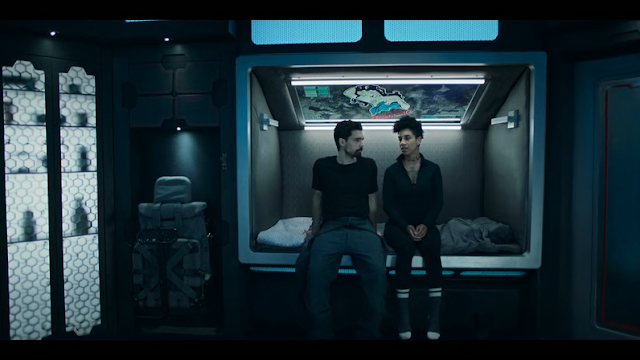
It is quite remarkable how James Holden keeps stumbling into the crosshairs of history again and again, forever driven by his need to do right and to press unmarked buttons. This world would look completely different without him – the ring gates unknown, the protomolecule either running rampant or entirely disappeared. Holden makes another historically relevant decision in Force Projection, one that he doesn’t consult his crew on very likely specifically because he wishes to bear the full responsibility of it himself, knowing fully well what it could mean to let Marco Inaros get away – but there is no way he can allow Bobbie to blow up Marco’s ship when Filip is right there on screen for Naomi to see, there is no way he would ever put Naomi through that kind of suffering. So he disarms the torpedo right before it hits, making Bobbie believe it was a dud, and Marco disengages, disappointed that he cannot fulfil his selfish and tactically irrelevant dream of killing James Holden, and the mother of his son who chose Holden over him. And I’m sure nothing at all bad will come from that decision, especially considering what we see a moment later. Marco, perhaps losing influence bit by bit because he is seen as weak and a coward for stripping and leaving Ceres, perhaps just embarrassed by his son who blames him for engaging the Roci unprepared, yet receiving a communication from the ring gates that another technological delivery has arrived from Laconia. And boy, does that protomolecule-empowered thing look scary (and finally, we have confirmation what is happening on Laconia, and where Fred Johnson’s sample went).

Marco’s decision to cut and run from Ceres station has considerable implications for the new Mars-UN alliance. When Chrisjen arrives at the stripped-down station to interrogate Chief Administrator Sanjirani, she finds out that the station only has resources left for three weeks. We know that Earth is struggling from lack of food after the attacks, and now the prospect of either feeding or leaving a million Belters to die, with all the political and moral implications of that, lie on Chrisjen’s shoulders. Ceres is indeed a trap, if a trap of a different kind than she expected. But then, the relief effort begins (with Monica embedded and observing predictable racism from the Inners), and soon, there’s bombs going off. 

With Laconia’s technology making its way to the Free Navy, it’s hard to see any good spin to Holden’s decision to spare Marco here. And meanwhile on Laconia, Cara returns excitedly to her fauna and flora to discover that something on the planet has fixed her broken drone for her (was it the alien dogs?), but when she returns home, her little brother has had a terrible accident. And what would a child who has just learned that something on this planet fixes broken things would do in that situation?

Random notes: 

We see the first segment of Monica’s series on how the asteroid attacks have affected Earth, and she is interviewing Pastor Anna! It’s very good to see Elizabeth Mitchell return. The segment does what Chrisjen wants it to do, as seen on Drummer’s ship, where there’s an immediate divide between empathy and sneering disdain in her own crew for what she says about Earth’s suffering (Michio feels sad, Josep gives a sarcastic “Welcome to the Belt”). 

Amos’ summary of Ceres station for Bobbie: Noddles, bars, and brothels (unionised ones!). When asked about an expansion on that, he says he’s never bothered to look. Their banter is GREAT, I hope we get more in the last three episodes. 

In another moving moment of acceptance, Holden puts Clarissa on night watch, and when she shares that she got her implants to destroy him and what kind of guilt and trauma they have caused her, he very kindly reminds her that she is in good company on the Roci when it comes to regrets. Part of the crew!

Amos receives a message from his old friend Prax who tells him that a scientist he worked with was executed by the Free Navy for spying: and he reveals that they have discovered a protein that (through protomolecule technology, or inspired by it?) could feed Earth easily. It's a great scene because we get to watch Clarissa and him sit through the science talk without much comprehension ("he'll get to it eventually", says Amos of his old friend). Amos knows that if this is important to Prax, it's important, so he forwards the information to Chrisjen. 

Tuesday, 21 December 2021

Station Eleven - It is better to not be noticed.

Station Eleven: 1x03 Hurricane. 


Survival is insufficient. I don’t want to live the wrong life and then die.

Station Eleven’s first and third episode could exist entirely by themselves, without the context of a television show. They are insular, self-contained stories that are complete, which creates a kind of alternative universe in which Station Eleven is an anthology show like Black Mirror (this is the first example that comes to mind, mainly because of Mackenzie Davis in the great San Junipero), as if the book it was based on were a collection of short stories. And if that were the case, then Hurricane would be the masterpiece, the stand-out, and in a post-2020 world in which television is making choices about whether or not to adapt the virus into its own history, it is one of most captivating examples of a world in which a virus wreaks havoc. 

Hurricane is a love story, told eloquently to the inevitable end, tracing the entire history, from the beginnings – a meet-cute, an actor about to become very famous is fascinated by a woman who is drawing, in a world of her own, and begins a conversation – to the end, when the two of them realise they haven’t quite managed to build a life together, that they will not survive their differences. In a way, the episode is a backstory to Arthur’s ominous explanation about Miranda’s (Danielle Deadwyler is a revelation is the role) finished graphic novel – that this is “the asshole that ruined my life” – which makes it even greater that the seeds of that graphic novel are right there at the table with them when they first meet, that the first time Arthur convinces Miranda that he is worth her time is when he offers an astute interpretation of a work that she has only just begun, only to then be given the drawing of a banana in jest, because nobody is allowed to see her great work before it is finished. Miranda follows Arthur into a bar, for his friend Clark’s birthday party – Clark later says that he has often done this before, kept the company of women that Arthur acquired a few bars previously, and she responds (so self-assured, so self-contained), that perhaps she is the one who acquired him – which is of course exactly what has happened. 


At the party, Miranda was drawing a symbol on a napkin – an anchor being cut, a symbol for cut and run, from her childhood, when her father sailed them around the world. After the first episode, I’ve thought about what kind of person would realise the difference between unnecessary panic and a true crisis, since the uniting feature of both episodes is that in each instance, the unimaginable happens and there are only a few people who realise in time, who see that things will not fall back into normalcy. Jeevan is among those people because he seems predisposed to panic, like his brother, and he trusts the person that delivers the message implicitly. But Miranda – who also trusts the person who delivers the message, it’s Leon, the boss at the logistics company she works for – seems predisposed to cut and run, seems well-prepared for whatever is supposed to happen. After all, it is how she has escaped her marriage to Arthur. 

It isn’t just small moments of discord, it’s a great question of whether they are suited for each other – if Miranda can stand the shallowness and superficiality of Hollywood (early into it, Elizabeth, who will eventually become Arthur’s second wife, attempts to reassure her at a premiere that she and Arthur are not having an affair, only to be shut down by Miranda’s “I’m dealing with a supply chain crisis here”), if Arthur can accept that Miranda refuses to share her great work with him, that she spends hours and hours drawing in their pool house, by herself, and then she doesn’t even see publication as the goal here – it’s art for art’s sake, for self-expression, to find meaning, not intended for an audience. Because this is such a great love story, it is predictable that Arthur would so precisely find the worst way to hurt Miranda – not just by cheating on her with Elizabeth, but by allowing Elizabeth entrance into the pool house, allowing her to see her work, violating her privacy. It all comes out at a dreadful dinner party through which Miranda and Clark suffer greatly, where two of the guests are insufferably vapid and derail any kind of serious conversation when it threatens to occur (Praha, one of the women breathes dramatically). Maybe it would be easier for Miranda if Elizabeth were as vapid as their other guests, but she isn’t – instead she is genuinely admiring of Miranda’s work, and articulate about its value and meaning, which makes the betrayal even greater. Miranda leaves and burns the pool house containing the first version of Station Eleven to the ground. 


And maybe it’s Leon who lends the theme of the episode when he explains logistics to Miranda: it’s about taking the right path between two points, and that isn’t always necessarily the shortest route. Miranda finished Station Eleven from the literal ashes of her marriage, and delivered it to Arthur (who gave it to Kirsten). She was then sent to Malaysia by Leon, to pitch a Chinese company, but once she arrives at the hotel, she soon realises that things are getting strange. People are hurrying, leaving, wearing masks. Their pitch meeting is cancelled. She eventually receives an ominous phone call from Leon, who tells her that the world is ending, that the internet is censored and isn’t telling the truth, that she has to make her way to the docks to go to a freighter, where she will wait out the plague on the open sea, for at least a year. She has a moment of deep, profound shock, maybe because this lines up with Station Eleven, and Arthur’s interpretation of Dr Eleven as “not lonely, but adrift”. I think that instinctually, Miranda is a lone wolf, but then, situations and people come along that move her to make a connection, which is why she doesn’t entirely follow Leon’s instructions and lets her colleague know about what is happening. He doesn’t believe her in any case, and goes to play a round of golf (later he says, “I went golfing because I thought that’s what a person should do”). The plan goes awry, and Miranda returns to the hotel, and eventually does give her pitch  - except at this point, she has received Clark’s phone call, she knows that Arthur has died. 

Miranda: It’s a good reminder that nothing we have done, or do, matters at all. But it does. It does. The man I loved died last night and… the man I died last night and I went to work. The man I loved died last night and I went to work instead. And I’m here without and you and you and… why wasn’t I with my love when he died?

It is a compelling monologue about catastrophe, about the absurdity of the situation – the world is ending and yet here they are, in a conference room, pretending to care about logistics. At what point during a global pandemic does the pretence of normalcy end, when can you stop, and admit how much of daily life is bullshit, dead weight, window dressing? 
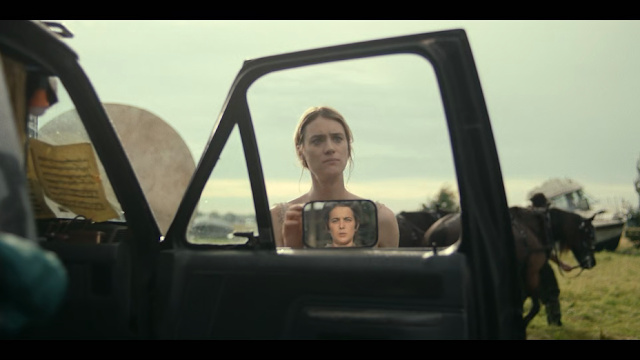
Miranda goes to her hotel room with her complimentary room sealing kit, and closes off the air vents, the windows, the doors, to await the inevitable. Dr Eleven knocks on the door,  Miranda and the room reflected in his visor. 

Random notes: 

This episode was written by the great Shannon Houston. 

Every scene of this episode is perfect. Has anyone ever seen a job interview as compelling as the one between Leon, a man who is truly passionate about logistics, and Miranda?

We find out in this episode that a second edition of Station Eleven went to Arthur’s son with Elizabeth – a hint as to how lines from the book ended up in the prophecy the stranger from last episode talked about. 

Kirsten tattoo's are the same "cut and run" symbol that Miranda was drawing on the napkin. 

What an enormously brilliant decision to cast Veep’s freakishly tall Timothy Simons here, and to saddle him with a golf bag for most of the episode to boot. The awkward, absurd beginnings of the apocalypse. 

That fucking room sealing set reminded me of those little gift packs of hand sanitiser and face masks that are just a part of life now apparently – the absurdity of having a global catastrophe repackaged as a little amenity by a global hotel chain.